ARTICLE
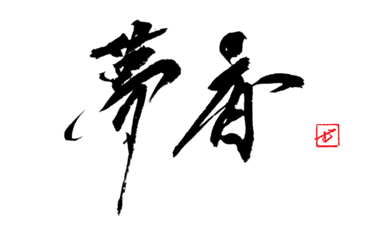
Kanji 雲 (Kumo / Un): Cloud, the Rain That Has Not Yet Fallen
2026-11-23
Kumo — What Has Not Decided to Fall
雲 carries the kun-reading kumo (cloud) and the on-reading un, present in compounds: 雲海 (unkai, sea of clouds), 雲泥の差 (undei no sa, lit. cloud-mud difference — a vast gap), 風雲 (fūun, wind and cloud, unsettled conditions). What all these words share is motion — a substance present but not fixed.
Where 霧 (kiri) describes a mist that settles at ground level, dissolving visibility into white, 雲 hangs overhead, unreachable, observed rather than entered. That vertical distance carries into the act of writing the character. It does not name something near at hand. It names mass accumulated far above.
雨 and 云 — Water Waiting to Fall
雲 is twelve strokes, composed of the rain crown 雨冠 (ame-kanmuri) above and 云 (un) below. The rain crown consists of a horizontal at the top (heaven), a shorter horizontal below it (earth), and four dot-marks between them representing falling rain. It encodes rain not as the act of falling, but as the structure that holds the possibility of falling.
云 is older than 雲; it was once an independent character for cloud, its curved strokes depicting visible swirling vapor. In 雲, it becomes the lower component — the turbulence of cloud that has not yet resolved into rain. Together: the structure of rain (雨冠) resting on the motion of cloud (云). The character names the interval between two states.
Where 澄 (sumu) names the clearness that emerges when sky and water resolve to transparency, 雲 is the stage before — the opacity that may lift or become rain. Three thousand years of scribes named this interval and found the right form for it.
Writing the Twelve Strokes
The difficulty in this character is the four dots inside the rain crown. They should land symmetrically — two on the left, two on the right — but mechanical symmetry produces a static field. What practice has shown me: let the two left dots open slightly, spreading up and down, while the two right dots sit a bit closer together. Asymmetry within symmetry. That gives the character the movement it needs.
云 below is two horizontal strokes and a curving sweep. The first horizontal is short; the second extends, turning at the right end into a rightward exit. The final curve pulls from left to right like a bow drawn taut — ease the pressure here and the line collapses, losing the weight of cloud. When writing on half-cut paper (35×68cm), I leave deliberate space between the rain crown and 云. Compressing that interval makes the character claustrophobic. The gap is where the air between heaven and cloud lives.
What Moves Through November Air
November mornings, the light in the practice space shifts. A cloud covers the sun; the room dims; then the cloud moves and the light returns. That rhythm is familiar from brush movement — pressure, release, pressure, release.
Where 灰 names what remains when fire finishes, 雲 names what moves before it has resolved. It may become rain. It may scatter on the wind. The character holds that openness — not an ending, but a form mid-change.
Ink and paper and brush, writing toward what hasn't fallen yet.