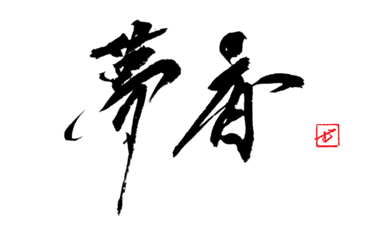
ARTICLE
Kanji 灰 (Hai / Kai): Ash, the Still Point at the End of Fire
2026-11-21
Hai — The Word for What Fire Leaves Behind
灰 carries the kun-reading hai (ash, cinders) and the on-reading kai, present in compounds: 灰色 (haiiro, grey), 石灰 (sekkai, lime), 火山灰 (kazanbai, volcanic ash). What these words share is an aftermath — a material condition that follows the event rather than constituting it.
Where 炭 names the solid, graspable body of charcoal, and 煙 names what rises when charcoal burns, 灰 is what remains when the burning is over. I burn incense before some practice sessions, and by the end the stick has become almost entirely ash. Touch it and it dissolves — weightless, dry, without sound. The word hai is short and clear, with no residue in the throat. That quality matches what it names.
厂 and 火 — The Structure of Covered Fire
灰 is built in six strokes from 厂 (gan-dare, cliff/eaves radical) and 火 (fire). 厂 represents a cliff face or overhanging roof — a form that covers from above. Under it sits fire.
The structure describes a paradox: fire burning under cover, losing oxygen, going out. Where live flames climb upward, ash falls down by gravity. 厂 placed over 火 models that inversion — fire that no longer reaches for the sky but returns to the ground. Three thousand years of scribes judged that this combination was the right way to write what fire leaves behind.
Writing the Six Strokes
My first stroke is the diagonal of 厂, the initial horizontal that slants down to the right. The decision here is how far to extend the leftward sweep below it: too long, and the fire component has no room; too short, and the whole character contracts. When writing on hansetsu paper (35×68cm), I bring 厂's sweep to roughly two-thirds of the character's width, then let the leftward exit travel at a moderate angle — not too steep, not too flat.
When I place 火 below, I set the vertical stroke's starting point just above where 厂's sweep ends. The nearness is intentional: the two components need to feel like one form rather than two stacked elements. The four marks of 火 spread out from there — the upper mark angled slightly right, the lower three landing left, right, right. That spread always reminds me of ash dispersing on air. I did not decide to write it that way. The character simply asks for that movement, and the hand follows.
The Grey That Diluted Ink Makes
Ash appears in calligraphy practice through diluted ink. When I thin oil-soot or pine-soot ink with water at the inkstone, the result is grey — a tone that, when dry on paper, sits between presence and absence. Traces rather than marks. This is what grey actually means: not a color in its own right, but the interval between black and white, between solid and nothing.
The exact grey changes every session. Temperature, humidity, and paper absorbency all shift the balance. When I sense I have added too much water to the brush, I pause and draw it once across the inkstone's edge to remove the excess. Too many passes and the ink grows dense again. That back-and-forth adjustment is where the grey lives — not found in advance, but arrived at through small corrections during the act.
November mornings, the practice space quiet after the incense has burned down. 厂 covers 火, and fire no longer burns. Yet the character holds the memory of fire in its very structure. Diluted ink makes grey in the same way: the ink is present, but it does not insist.
Ink and paper and brush, writing toward what fire leaves behind.