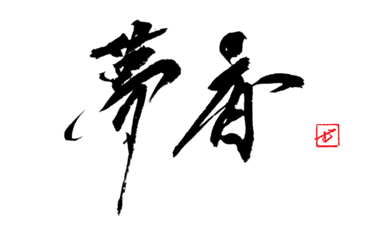
ARTICLE
Kanji 煙 (Kemuri / En): Smoke, Oil-Soot Ink, and What Fire Leaves Behind
2026-11-20
Kemuri — The Word That Names What Fire Becomes
煙 carries the kun-reading kemuri (smoke, fumes) and the on-reading en, found in compounds: 煙草 (tabako, tobacco), 狼煙 (noroshi, signal fire), 油煙 (yuhen, oil soot), 煙突 (entotsu, chimney). These words share a quality of movement through invisible channels — things that travel without edges, that arrive at their destination changed.
Where 炭 (charcoal) names the solid, graspable body of carbon, 煙 names what that body becomes when it combusts. Charcoal can be held; smoke cannot. I burn incense before practice on some mornings, and I watch the thread of smoke ascend toward the ceiling and disappear through a gap in the window. En is a short sound. It ends where you can no longer see.
Fire Radical and 垔 — The Character's Structure
煙 contains thirteen strokes and belongs to the fire radical group (火偏). The right-side component is 垔 (in) — a form resembling 西 placed above 土, carrying a sense of covering, sealing over from above.
Fire burns upward. But smoke does not always go straight up — in a still room, smoke spreads horizontally, forming a layer beneath the ceiling, gradually covering the space. The covering quality of 垔 catches this lateral movement. The fire radical provides the meaning; 垔 contributes the en reading and something of the character's nature. Three thousand years of scribes felt that correspondence and held the two together into this combination.
Writing the Thirteen Strokes
My first concern when writing 煙 is the length of the fire radical's central vertical stroke.
火偏 consists of one vertical stroke and three dot marks. The length of that vertical stroke sets the character's center of gravity. If it runs too long, a gap opens between the radical and the right component and the character splits along its center. If it is too short, the fire radical compresses inward and all visual weight falls right.
When writing on hansetsu paper (35×68cm), I bring the vertical stroke of 火偏 to a point that aligns vertically with the first horizontal stroke of 垔 — the two vertical anchors echoing each other across the character's internal divide. The three dot marks descend from top to bottom with a slight rightward lean, suggesting an open flame rather than a vertical column of three stacked points.
The right component 垔 layers the upper part (resembling 西) over 土 below. I hold the horizontal strokes of the upper section from spreading wide — if 垔 extends outward, the fire radical's narrower form is overwhelmed and the character loses vertical coherence. A slight inward pull through the upper strokes of 垔 gives the whole thirteen strokes somewhere to settle.
Oil-Soot Ink — When Smoke Becomes the Material
There is a type of Japanese ink called 油煙墨 (yuenmoku, oil-soot ink). Made by burning sesame or rapeseed oil and collecting the soot, then binding it with nikawa (hide glue) — the material is literally 煙, smoke, made solid.
Alongside 松煙墨 (pine-soot ink), 油煙墨 is one of the two classical categories of Japanese ink. Its distinctive quality is a blue-black luster: when dried ink catches light at an angle, the surface has a cool blue-black sheen. This blue quality comes from the carbon structure of oil combustion, which differs from the warm brownish-black of pine-soot ink. The feel at the inkstone is also different — oil-soot ink has a slight viscosity, and the smell of nikawa rises from the stone as you grind.
When I write 煙, I use oil-soot ink. Smoke became ink; that ink writes 煙. The distance between the subject of the character and the material in my brush collapses to nothing. Practice sometimes arranges this kind of correspondence — the etymology of a character and the substance on the brush meeting at the same point.
November mornings, inkstone, the smell of nikawa from freshly ground oil-soot ink. Charcoal becomes smoke; smoke becomes ink; ink becomes the character that names smoke. The whole chain passes through the hand in a single stroke.
Ink and paper and brush, writing toward what fire leaves behind.