ARTICLE
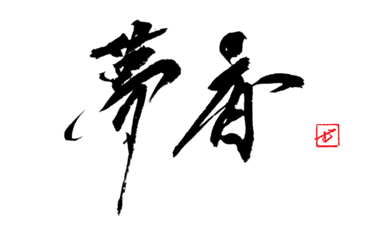
Kanji 澄 (Sumu / Tou): Clarity, Winter Water, and Lines That Clear
2026-11-18
Sumu — When Something Extra Is Removed
澄 carries two kun-readings: sumu (to become clear) and sumasu (to clear, to listen carefully). The on-reading is tou, but everyday Japanese almost always uses the kun forms.
Sumu — water clears, air clears, a voice clears. Something extra dissolves or settles, and transparency returns. Sumasu — mimi wo sumasu, to listen with cleared ears; to sharpen attention by stripping away noise. The word appears wherever something becomes unobstructed: winter stream water you can see the bottom of; morning air that carries sound farther than usual; a night sky so cold the stars seem individual.
In the practice space, I use the phrase 澄んだ線 — a "cleared line." A brush stroke where hesitation is absent, where the ink enters the paper without excess resistance, where the motion completes itself. It is a technical condition and also a mental one. A cleared line cannot be aimed for directly. It appears when preparation and accumulation have done their work.
Water Radical and Ascent — The Character's Construction
澄 contains fifteen strokes and belongs to the water radical group (氵). The right-side component is 登 — the character for to ascend or to climb.
登 derives from an old pictograph: feet on a stepped offering platform, two hands raising it upward. The core meaning is upward motion, elevation, reaching height. Combined with the water radical, 澄 pairs rising with water.
The physical reality of water clearing is the reverse: turbidity sinks to the bottom, and the upper layer becomes transparent. But "water that ascends toward transparency" accurately describes how cleared winter water appears — weightless, elevated, as if it has risen above its own heaviness. When I look at a winter river running over stones, the water above the riverbed has exactly that quality: light and high. Three thousand years of scribes felt the same thing when they fixed this component combination.
Writing the Fifteen Strokes
My first decision when writing 澄 is how to place the three-dot water radical (氵).
The sanzui radical becomes stiff if its three dots are arranged too vertically. I start the first dot with a slight rightward flick, set the axis with the second, and direct the third leftward — three small directional differences that open space for 登 on the right. If 氵 sits in a rigid vertical column, the whole character feels compressed.
登 is a tall component. Its upper element consists of two diagonal strokes spreading apart; if the angle opens too wide, the character scatters at the top. I keep the opening angle equal on both sides, contained within the character's total width. Below that, three horizontal strokes define the lower structure. The final horizontal is the one I watch most carefully. When writing on hansetsu paper (35×68cm), if that stroke tilts upward to the right, the character loses its grounded quality. Stopping deliberately at a level position keeps the center of gravity where it belongs.
The morning after writing 炭, I added water to the inkstone and began grinding — the same opening as every day, cold. In winter, ink dries faster on the brush. With fifteen strokes to complete, the brush can go thin before the character finishes. I press the tip lightly against the inkstone edge before beginning each character to calibrate the ink load.
The Inkstone Water Clears
The black of ink comes from soot and animal glue. Cold water added to a cold inkstone, ink stick beginning to dissolve — the black starts thin and deepens with each pass. As the water takes on more ink, the upper surface develops a luster that the starting water lacked. Turbidity settles; transparency forms. The inkstone clearing is the same process the character describes.
In winter, that grinding process is the first clearing of the day. Water clears; ink clears; the lines that follow carry some of that clearing. A line that is 澄んだ — truly cleared — does not come from wanting it. It comes from the accumulated preparation of mornings.
Ink and paper and brush in the winter cold, writing toward clarity.