ARTICLE
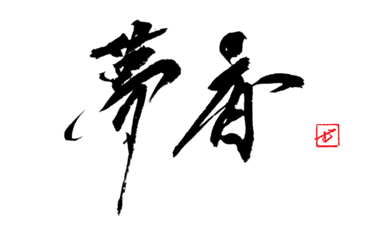
Kanji 嵐 (Arashi/Ran): Storm, Mountain Wind Gone Wild
2026-11-24
Arashi — Wind That Has Crossed a Mountain
嵐 carries the kun-reading arashi (storm) and the on-reading ran, visible in place names: Arashiyama (嵐山), the famous hills west of Kyoto whose name means storm-mountain. In compounds: 砂嵐 (sunaarashi, sandstorm), 雪嵐 (yukiarashi, blizzard). What unites them is not just wind, but wind that has overwhelmed something — become more than the landscape can quietly absorb.
Where 風 (kaze) names the wind itself, 嵐 names what that wind becomes once it has reached a certain intensity. The calm and the storm share a root. Only the storm has this character.
山 and 風 — The Structure of a Storm
嵐 is twelve strokes: 山 (mountain, 3 strokes) above, 風 (wind, 9 strokes) below. Mountain is a pictograph of three peaks, the center taller than the flanks. Wind is older and stranger — a form rooted in the belief that air currents carried insects, its outer frame (几) enclosing the character for creature (虫).
The arrangement matters: mountain does not sit below wind. It sits above, and wind presses up against it from beneath. The storm is what happens when wind meets the resistance of height. Where 霧 (kiri) describes moisture that settles at ground level, dissolving visibility into white, 嵐 operates at altitude — the turbulence above ridgelines, where air has nowhere left to go but wild. Three thousand years of scribes named this force and found the right form for it.
Writing Twelve Strokes — Mountain Small, Wind Large
The first difficulty in this character is proportion. Nine of the twelve strokes belong to 風. This is, structurally, a wind character. Mountain contributes three strokes and sets the stage. Wind carries everything else.
When I first began writing 嵐, I treated 山 with too much care — deliberate, evenly spaced strokes, making sure the three peaks were well-formed. The result was a top-heavy character where 風 had no room to breathe. What practice taught me: compress the mountain. The three peaks should be unequal — slightly more space between left and center than between center and right, the whole cluster tilting a few degrees upward to the right. That movement in the upper component gives the lower component space to expand.
The harder part is 風 itself. When writing on half-cut paper (35×68cm), I focus on the final stroke of the outer frame — the long curving sweep that exits down and to the right. I write that stroke by shifting my center of gravity slightly forward, letting my body weight participate. When that transfer lands in the line, the sweep has elasticity — it arrives at its end rather than dropping there. Without the weight, the stroke just falls, and the wind has no energy.
What the Calm After Sounds Like
Late November, mornings arrive with wind that moves through the walls. Some days I can hear it in the ceiling. That physical context is not separate from practice — the character on the paper names exactly that force outside.
Where 雲 (kumo) holds the interval when sky-water has gathered but not yet fallen, 嵐 is the interval broken — the weather that arrives when holding is no longer possible. But storms have edges. What the character also carries, compressed into its twelve strokes, is the implicit promise of an after. The storm clears. The air that follows is the clearest air there is.
Ink and paper and brush, writing toward the edge of what the wind can hold.