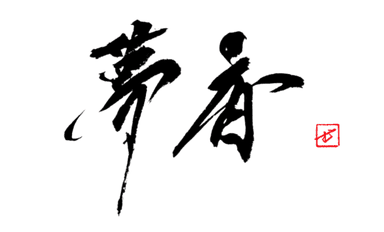
ARTICLE
Wa-Kei-Sei-Jaku — Four Characters Tea and Calligraphy Share
2026-08-05
Read the Four Characters in Order
Wa-kei-sei-jaku — harmony, respect, purity, stillness. It is usually named as the four characters into which Sen no Rikyū folded the spirit of tea. But I read it less as a rule for the tea room than as the words that settle my hands before I write. The four are not a list laid side by side; they are stacked in order. Harmony lets respect stand, respect lets purity clear, purity lets you fall into stillness. The half-hour before I write a finished piece comes undone in roughly that sequence.
Whether I face a hansetsu sheet (35 × 136 cm) at dawn or share the hour of writing with someone across the world on a TikTok LIVE at night, my hand passes once through each of the four before it becomes a line.
Wa and Kei — Meet the Ink and Paper Halfway
Wa, harmony, is tuning yourself to the other. In tea it is the mind held between guest and host; in calligraphy the other is the ink and the paper. Grind a hard new inkstick too fast and the grains coarsen and the line turns gritty. Write on dry winter paper with the water you used in summer and the bleed goes thin. Harmony, to me, is going over to meet the mood of today's ink and today's paper — testing the pooled ink with the pad of a finger, and if it is thick, one drop of water; if thin, ten more grinds. That single drop is what harmony looks like in the hand.
Kei, respect, shows up in where I set my tools. The brush returns to the same notch on the rest, the inkstone to the same orientation, the paperweight two fingers down from the top edge. Returning them there each day is not tidiness; it is a way of bowing my head to this one brush for letting me write again. As I wrote about how tea and calligraphy share the same gestures, folding the tea cloth and grinding ink are close kin — both are the body bowing to its tools. A hand without respect goes careless with them somewhere.
Sei and Jaku — Clear It, Then Fall Quiet
Sei, purity, is clearing away what soils. It begins in the physical, not the spiritual. Yesterday's glue left in the stone keeps fresh ink from dissolving, so before a finished piece I wash the stone, change the water, and take everything needless off the desk. On days I have skipped caring for the inkstone, I stumble at this stage. When the hands clear, oddly, hesitation clears with them: the head that couldn't settle on which character to write has narrowed to one by the time the desk is bare.
Jaku, stillness, is not mere quiet but the quiet left after motion — the tea room's tension loosening until only the kettle sings. In calligraphy it arrives the instant I lift the brush from the final stroke and the room seems suddenly to widen. The other three exist to let you fall here. If ichigo ichie teaches that no sheet can be written the same way twice, stillness teaches you to stop your hand and sit once the sheet is done. After a finished piece I don't wash the brush right away. I watch the drying ink take on its sheen, in silence, for a while.
The Day I Skipped the First Three
You can skip wa-kei-sei-jaku. Skip it and the characters still come out — which is exactly what makes it dangerous. Chased by a deadline once, I skipped harmony and respect and purity and reached straight for stillness: a cluttered desk, yesterday's ink dried in the stone, ink ground thick without reading its mood. I dropped one large character onto a hansetsu sheet, wearing "stillness" like a costume. The line looked strong. But by morning the ink had thinned, lost its sheen, and lifted as powder when rubbed. A line drawn without reading the glue or the dryness of the paper wasn't still — it was only cold. I threw it out, and since then I have stopped skipping the order.
The four characters aren't a slogan for your state of mind. Meet the ink and paper with harmony, bow to the tools with respect, clear the desk and the head with purity — and only then can you fall into stillness, that wide quiet after the sheet is done. Tea and calligraphy hang the same four characters because both know the same thing: the preparation is the performance.