ARTICLE
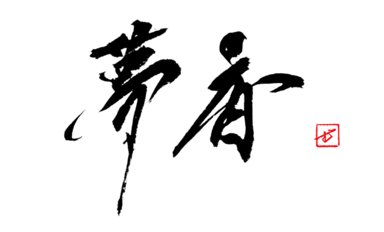
Ichigo Ichie — Writing the One Time That Never Returns
2026-07-18
A Phrase Born in the Tea Room
Ichigo ichie — "one time, one meeting." It circulates now as a tidy four-character idiom, but it began in the world of tea. The teaching of Sen no Rikyu, recorded by his disciple Yamanoue Soji, holds the idea of "a single meeting in a lifetime," and in the late Edo period the statesman Ii Naosuke fixed it into the four characters ichigo ichie in his tea writing Chanoyu Ichie Shu. Host and guests will never again gather as the same faces in the same hour — so this one bowl of tea today is served as the only such meeting in a lifetime. That is the true weight of the phrase.
So I don't take ichigo ichie to mean merely "cherish nice encounters." Its reach is harsher. You cannot have the same people, in the same place, for the same span of time, twice. It is the resolve to face that never-again without looking away.
The Real Sheet Is One Shot
Practice long enough and you see this phrase is not the tea room's alone. After dozens of warm-up sheets, when I finally turn to the real sheet — the honshi — I always tell myself: the real sheet is one shot. From the instant the loaded brush touches the washi, that sheet can never be redone. On a half-sheet, 35 by 68 centimeters of white paper, once the first stroke is set the second has no choice but to build on it. In its no-going-back, calligraphy is much like a tea gathering.
When I actually write these four characters, what I guard most is this: emptying, just before the real sheet, the hand that has memorized a "good shape." If I try to replay the sweeping stroke of 会 that I drew a hundred times in practice, the line becomes a copy of the past. Today's humidity, today's ink density, today's breath — unless the line carries the conditions that belong to this one time only, I betray the words even as I write them. So before the real sheet, I turn every practice page face down and out of sight.
Because You Cannot Go Back, the Line Cannot Lie
I once failed bitterly with these four characters. The first three ran so well it surprised me, and a greed rose up — I did not want to miss the final 会. At that instant force gathered in the brush tip and the closing stroke stiffened. Knowing I could not go back, I turned cautious as if I could — and that contradiction printed itself straight into the line. Ichigo ichie is a phrase that flees the moment you try to write it well. That one sheet taught me so.
While I grind the ink, the heavy scent of animal glue settles into the room, and my knees go numb in seiza. That numbness, that dry post-rainy-season air — they belong to this one time and no other. Now, even when the first three characters run well, I set the fourth down as it comes, as a stroke that will also never return. The sheets that don't work I dry and keep rather than turning them face down. Precisely because I know it never comes back, I cannot lie to that one sheet. That is ichigo ichie in calligraphy.
On turning the one-time-only into a line I've written more in Calligraphy and Impermanence, and on where tea and calligraphy meet in Calligraphy and the Way of Tea. In August 2026 my first solo exhibition "Zen" opens at Palette Gallery in Azabu-Juban, Tokyo, showing works drawn from Zen phrases. I hope the few minutes a visitor stands in that room will also be, for them, a meeting that comes only once. August 5 (Wed) – 10 (Mon), admission free. Details on the exhibition page.