ARTICLE
Shodo and Chado — Two Paths, One Spirit
2026-06-07
Shodo and Chado — Two Paths, One Spirit
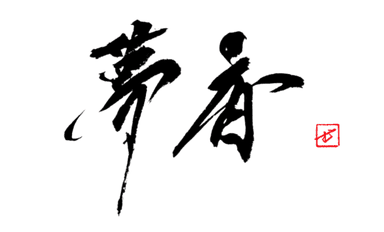
A single scroll of calligraphy hangs in the tea room.
In the world of chado — the way of tea — the hanging scroll in the tokonoma alcove is far more than decoration. It sets the theme of the gathering, expresses the host's heart in welcoming guests, and determines the entire atmosphere of the space. This is why tea masters spend great care selecting which piece of calligraphy to display.
The connection between shodo and chado runs deep.
Why "Do" — The Way
Both "shodo" (書道) and "chado" (茶道) carry the character do, meaning "way" or "path."
If these were merely technical skills or hobbies, "sho-jutsu" or "cha-jutsu" — the terms for technique or art — would suffice. Yet both are called do because their essence lies beyond the mastery of technique.
"Do" means a way of life.
Through the act of writing each brushstroke, one cultivates the self. Through the act of preparing each bowl of tea, one expresses respect for another person. In that ongoing practice, one's character as a human being is shaped — this is the concept of do.
In both shodo and chado, the finished work or the perfectly brewed tea is not the ultimate goal. The true value lies in the process itself.
Ichi-go Ichi-e: The Philosophy They Share
The phrase ichi-go ichi-e — "one time, one meeting" — captures the fundamental spirit of the tea ceremony.
"This encounter exists only once in a lifetime. Give it everything you have." This teaching, passed down through the disciples of Sen no Rikyu, the great tea master, applies equally to calligraphy.
The moment the brush meets the paper can never be repeated. The same line cannot be written twice. The same bleeding of ink cannot be recreated. There is a line that only the self of this precise moment — different from yesterday's self, different from tomorrow's — can bring into being.
This is where both the terror and the beauty of shodo reside. No matter how thoroughly you prepare, you cannot know what will happen in the moment of writing. The willingness to place yourself in that uncertainty — this is the spirit of ichi-go ichi-e.
The Aesthetics of Ma — Negative Space
In the design of a tea room, nothing matters more than emptiness.
The whiteness of walls, the stillness of tatami, the way light falls — the spaces containing nothing allow what is present to shine. The grass-hut tea style perfected by Rikyu was, at its core, the beauty of subtraction.
The ma — negative space — in calligraphy works the same way.
The relationship between characters, the dynamic between brushstroke and white space: the unmarked portions of the paper carry meaning equal to the ink. A work that tries to fill every space with characters holds no power. It is because white space exists that the brushstrokes breathe.
What deserves attention is not only what is written. Developing an eye that also sees what was not written — this is the perspective needed to deeply appreciate calligraphy, and it is the same sensibility needed to truly experience a tea gathering.
Wabi-Sabi and the Beauty of Imperfection
At the core of tea ceremony aesthetics lies wabi-sabi.
Finding beauty in the simple rather than the ornate, in the slightly imperfect rather than the flawless, in the aged rather than the new — this is the wabi-sabi way of seeing.
In calligraphy, this manifests as kasure — the natural drag and break of ink as the brush runs dry.
The line that appears where ink thins and frays into nothing. A line that no computer can produce, born only in the meeting of brush, paper, and ink, where accident and intention overlap. Sensing more life in a kasure line than in a perfectly uniform one — this is wabi-sabi perception itself.
Rather than being ashamed of imperfection, finding individuality and vitality within it — this aesthetic sensibility has run through Japanese art for more than two thousand years.
Hanging Calligraphy in the Tea Room
Since ancient times, tea masters have said: "The scroll of calligraphy is the centerpiece of the tea room."
No matter how perfectly the tea is prepared, if the calligraphy in the alcove fails to harmonize with the spirit of the gathering, the tea ceremony cannot come together. To that degree, calligraphy holds the power to define a space.
Generations of tea practitioners sought calligraphy from Zen priests and carefully preserved works by celebrated calligraphers. The words in the brushwork set the theme of the gathering. The character of the strokes determines the quality of the space. Feeling the gathering through the calligraphy before tea is even served — this was the holistic experience of the way of tea.
This sensibility is alive in the contemporary world. Placing a single work of calligraphy in a space changes the air of that place. Beyond the meaning of the characters, the force of the lines, the gradations of ink, the breadth of the white space — calligraphy brings a quality of ki, or vital energy, to any environment.
What These Two Ways Teach Us
Those who have studied both shodo and chado deeply tend to say the same thing:
"The longer you continue, the more difficult it becomes."
What is easy to get good at is easy to tire of. What yields easy answers doesn't require sustained engagement. Neither calligraphy nor the tea ceremony ever reaches a moment of completion — and that is precisely why they can be practiced for a lifetime.
What is refined through that practice is not technique alone. Handling things with care. Directing your full awareness to this moment. Giving shape to consideration for others — the way you move through daily life begins to transform.
A thousand years of spirit dwells in a single brushstroke. A single meeting between people dwells in a single bowl of tea.
Both are do — ways of living each moment with care, using the hands, the body, and the heart.
Calligrapher Muko