ARTICLE
Kissako — The Zen in "Well, Have Some Tea"
2026-08-27
Three Characters, Not a Dismissal
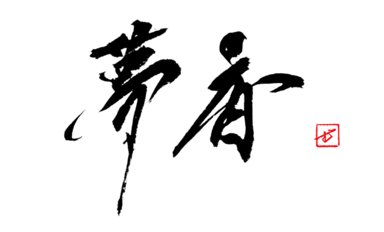
Kissako. Read the characters flatly and they say "drink your tea and go." A brush-off, almost. But I have never once received these three characters as a way of sending someone away. If anything the opposite — sit down, have a cup before you leave. I write them as a hand held out, not a door closed.
They come from Zhaozhou, a Tang-dynasty master. A monk arrives at his temple, and Zhaozhou asks, "Have you been here before?" The monk says yes. "Go and drink tea." Another says no. "Go and drink tea." The head monk watching asks why he gives the same answer to the one who has come before and the one who hasn't — and Zhaozhou turns to him and says, "Go and drink tea." The same three characters, three times. The whole of this saying lives right there.
The Same Tea for Whoever Comes
To the newcomer, to the regular, to the one who questioned him, Zhaozhou simply poured tea. He did not change how he served it according to rank or history. I read this as a rule for whom I write for: choose no one.
On a TikTok LIVE, the other side of the screen holds someone who cannot read a single character and someone who has practiced for decades, at the same time. I used to try, without noticing, to split my line into one "for those who understand" and one "made easy" — and dropped a half-thing that reached neither. Kissako corrects exactly that. Whoever is watching, the tea I pour — that is, the single line — can be the same. It has to be the same. A line that measures the viewer's rank and holds something back always comes out thin. If ichigo ichie teaches that no sheet is ever written the same way twice, kissako teaches you never to spare your hand for anyone.
Boiling the Water Is the Preparation
When I pull this saying toward calligraphy, I always think of the preparation of the tea. What Zhaozhou poured was probably nothing special — an ordinary tea, brewed with care and set down. Writing is the same: not skipping the ordinary preparation is far harder than producing one special character.
Before a finished piece I boil water first. I wash the inkstone, change the water, and give the few minutes of grinding blue-black ink to quieting the day's self. When the faint smell of the glue rises, the speed of my hand drops on its own. Whether or not that "one cup" happens changes how the first stroke sits. As I wrote about how tea and calligraphy share the same gestures, whisking tea and grinding ink are startlingly alike — in both, the quiet time before serving decides what is served.
The Thin Line the Day I Chose My Guest
Once, on a commission, I betrayed these three characters. Told beforehand that the client knew calligraphy well, I braced without being asked to. Facing a hansetsu sheet (35 × 136 cm), some part of my head was writing "a character to show someone who understands." Work in some technique, work in some dry-brush scrape — and the line I tuned to their eye came back oddly stiff, as if watching the guest's face. The ink sat fine; the line was reading the room. I threw it out and wrote another the way I always do, forgetting who was watching, facing only paper and ink. That was the one I delivered.
Kissako is neither a dismissal nor a technique of hospitality. To be able to pour the same tea for anyone means your tea has settled. Not changing for the visitor isn't coldness; it is the quiet confidence of a center that doesn't move. Well, have some tea — a hand that can hold out a single line and say that is one I am still grinding toward.