ARTICLE
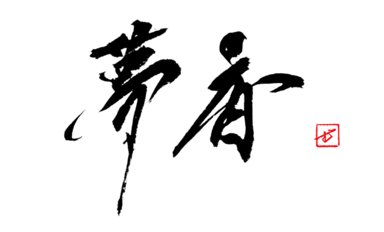
Byōjōshin Ze Dō — The Ordinary Mind Is the Way
2026-08-29
The Ordinary Mind Is Not a Relaxed Mind
Byōjōshin ze dō — the everyday mind, just as it is, is the Way. In English "ordinary mind" can sound thin, close to "just stay calm." But the mind this phrase means is not a technique for smoothing your nerves before a match. It is a mind without contrivance, without calculation — the mind that simply is, before it has begun tallying good against bad.
The words come from an exchange between Nansen and his student Jōshū. Jōshū asked, "What is the Way?" Nansen answered, "The ordinary mind is the Way." When Jōshū asked whether he should then try to turn toward it, Nansen replied that the moment you try to turn toward it, you have already turned away. Reach out to grasp the Way and you leave it. That single line is what presses on me most when I pick up the brush.
"I'll Write a Good Line" Muddies the Line
Calligraphy shows contrivance directly. When I write a single character on a half-hansetsu sheet (35 × 68 cm) having decided today I'll make a good line, the line usually comes out muddy. Before the tip even touches the paper, the hand is already wanting the result. A wanting hand rushes ahead and starts moving before the ink has sunk into the first point of the stroke, and the horizontal it draws skates along the surface with no core to it.
On a day when I add nothing and take nothing away — just lower the brush while breathing out — thickening and thinning I never aimed for enter the line on their own. Nansen's "the moment you turn toward it you turn away" is not, for me, a matter of philosophy but a physics I confirm at the brush tip every day. Want it and it muddies; let it be and it flows. If nichijō kore kōjitsu is the phrase for receiving the day as it comes, byōjōshin ze dō goes one step further: move your hand with the mind you received, unchanged.
I Have Never Made a Special Sheet on Purpose
I grind blue-black ink in the faint smell of animal glue, then steady my breath over the steaming inkstone. That grinding time is where my ordinary mind is made. For half an hour, letting only the weight of my arm work the ink, the wish to make something good slowly settles to the bottom. By the time the ink is ready, the eagerness has thinned, and only the readiness to write remains.
I once sat down having decided a sheet for my exhibition would be the one. The harder I tried to write with a special mind, the stiffer my hand became. I wrote the same character some forty times, and each time the strain pooled at the opening stroke and hardened black. I chose nothing that day. A few days later, inside the ordinary flow of practice, a sheet I wrote without thinking it special held the stillness I had been chasing. The mind aiming to produce something special was exactly the mind turning away from the Way. Since then I do not sit down having named "today's piece." I grind as always and write as always — the special appears only out of the ordinary. Keeping my daily practice unbroken matters because without the ground of the ordinary, not one good line will stand.
Byōjōshin ze dō does not tell you to be still. The wish to write, the impatience when it fails — none of it needs erasing. You simply leave it out of the reckoning and lower the brush with your usual hand, as usual. That levelness becomes the line itself. I grind ink each morning without aiming for the special because this is how I check the phrase again — not in my head, but in my hand.