ARTICLE
Nichinichi Kore Kojitsu — What Makes a Day a 'Good Day'
2026-07-13
A Line from Master Unmon
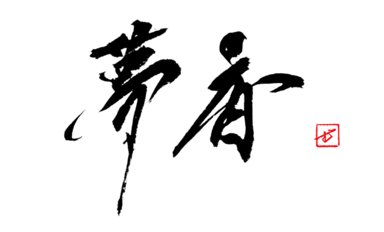
Nichinichi kore kojitsu — "every day is a good day." The five characters come from the sixth case of the Blue Cliff Record, a Song-dynasty Zen collection, attributed to Master Unmon (Yunmen).
People often quote it as a cheerful slogan: every day is a great day. But I don't think that is the reach of it as a Zen phrase. It is not the optimism of reading a rainy day as a sunny one. Rain stays rain; a day that will not go your way stays that way — and all of it, without sorting, is received as a "good day." You set down, just once, the ruler that measures good days against bad ones. Read like that, the five characters go suddenly quiet.
The Difficulty of Not Choosing "the Good Sheet"
When I write this phrase, what I guard against most is aiming for a good result.
If, while writing "every day is a good day," the hand is busy picking and choosing today's best sheet, the line betrays the words. So for these five characters I loosen my usual stance of "the real sheet is one shot only." However many I write, I refuse to call any of them a failure. The sheets that didn't work, I dry and keep rather than turning them face down. Unless the act of not choosing is built into the practice itself, the five characters become a lie.
Ink, washi paper, and brush. A tradition of more than three thousand years has managed with these three alone. The ink on a sunny day and the ink on a rainy day can be ground the same way, on the same inkstone. Whether you can believe that is where this phrase turns.
The Hand Cannot Write the Same Day Twice
The character for "day," 日, appears twice in the five. I deliberately do not make the two match.
Between the first 日 and the second, the load of ink and the angle of the brush shift a little. It is the rainy season now; the humidity is high, and a half-sheet of washi, 35 by 68 centimeters, drinks water more slowly than usual. Ink I set down at what I thought was the same tone lingers longer on the paper and slowly bleeds. I used to add such a sheet to the discard pile. Now I receive it as the day's own dampness printed into the line. Once I understood that the two 日 turning out different is nichinichi kore kojitsu, some of the tension left my hand.
While I grind the ink, the faintly sweet, heavy smell of animal glue fills the room, and my knees go numb in seiza. That numbness, that scent — they belong only to this one day. The same conditions will not return tomorrow. So before I write, I always hold one extra long breath, a breath to greet today's paper and today's ink. Turning a Zen phrase into a line is less about explaining its meaning than about taking the whole of the day upon yourself.
Nichinichi Kore Kojitsu Inside the Exhibition
In August 2026, my first solo exhibition "Zen" opens at Palette Gallery in Azabu-Juban, Tokyo, showing works drawn from Zen phrases.
The space is composed of three elements: calligraphy, fragrance, and sound. Your pace slows, and you find yourself pausing before a single work. If those few minutes become a time when you stop counting good against bad, that is enough. Those who arrive in sunshine and those caught in the rain stand before the same sheet — and that place, I feel, is the closest thing to nichinichi kore kojitsu.
August 5 (Wed) – 10 (Mon), admission free. Details on the exhibition page.