ARTICLE
Ma — The Time That Runs Between Two Lines
2026-08-19
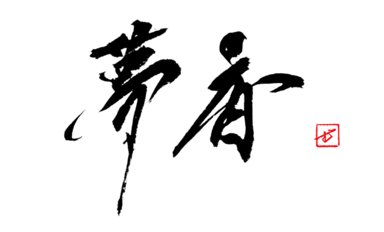
Ma Is Not Space, It Is Time
Say ma in calligraphy and most people picture the blank of the paper — the gap between one character and the next, the space between the columns. That is one kind of ma, true. But the ma I have found hardest in practice is the invisible one: the instant between finishing a line and entering the next. The moment the brush leaves the paper and hangs in the air. What flows through that moment is what I call ma.
Write the same character with the same margins twice, and one sheet breathes while the other stays stiff. The difference is not the shape but the length of time I placed between the lines. Did I lift away fast, or hold a single beat? Hold it too long and the line breaks; too short and the next stroke rear-ends the one before it. Ma exists only while you are writing. On the finished sheet, only its trace remains.
Where to Place the Beat
Writing two characters in running script, the part I guard most is the crossing — from the last stroke of the first character to the entrance of the second. The brush leaves the paper, but the heart must not. I keep the momentum of the previous line while gathering a little breath, then drop into the next stroke. That gathering is ma. Connect without it and the line runs thin and light; gather too much and the two characters become strangers to each other.
I measure this crossing with my breath. While a line is drawn I exhale; while the brush is in the air I take a shallow breath in; I enter the next line before that breath completes. The length of the breath becomes the length of the ma. So on days when my breathing is shallow, the ma goes shallow too and the lines hurry. When a morning won't come right, it is usually the breath, not the line — sitting in seiza and settling the breath brings the ma back on its own. I have written more on this in Seiza and Posture.
With layered pale-ink work the interval runs longer still. I write one layer and lay the next before it fully dries. How fast it dries changes with the day's humidity, so the wait can't be fixed in advance. Watching the sheen leave the paper, I count a few more seconds with my body. That waiting is ma too. The time spent not writing is what decides the depth of the next line.
A Beat Without Sound
Many compare ma to a rest in music, and I agree — though "rest" makes it sound like empty time, which slightly misses it. A rest is silent, but the pulse keeps running. The ma of the brush is the same: even while the brush is stopped, the memory of the writing speed does not break. Stopped, yet moving. Hold that contradiction and the whole sheet comes together on one rhythm.
When I write on TikTok LIVE, what viewers respond to is never the flashy moment of a line being drawn — it is the instant I stop the brush before the next stroke. A gasp goes up at that stillness. The beat the writer places holds the breath of someone on the other side of the screen. Ma belongs to the writer and to the one watching at once.
So I think of ma as something placed, not something left empty. The blank appears as a result; the beat is set by will. Where to gather a breath, where to lift away — that chain of choices is what makes a sheet mine. On ma as space, the design of white on the page, see The Aesthetics of Ma; on what lives in the line itself, The Power of a Single Line.
If there is a word you would like made into a single sheet, I would be glad to discuss it, down to where the beats are placed — please get in touch. Ma leaves no shape on the paper, but it stays, surely, in the breath of the one who looks.