ARTICLE
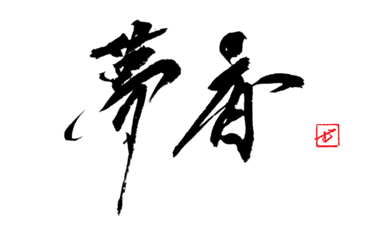
Kanji 霜 (Sou / Shimo): The Character That Sees Frost
2026-11-11
Two Readings, Two Ways of Knowing Frost
霜 carries the on-reading sou and the kun-reading shimo. Sou enters words like 霜害 (frost damage), 降霜 (frost occurrence), 霜雪 (frost and snow) — terms that treat frost as an observable, measurable event, the kind you find in weather reports and agriculture.
Shimo arrives differently. The sound of frost-pillars cracking underfoot on the path to the studio. The cold held in the studio window glass on November mornings, its surface white and crystalline. Shimo belongs to the body before it reaches language. When I carry shimo into the character rather than sou, something in the preparation changes — the first stroke takes a different weight.
Coming to 霜 today, the day after writing 寒, the same cold in the fingers returns. Writing winter characters in sequence, the studio's temperature accumulates in memory.
Rain Crown and Eye
霜 belongs to the rain radical group — 雨, 雪, 雷, 霧, 露 — characters for things that descend from sky or take form in atmosphere. Below the rain crown sits 相, which serves as a phonetic component (carrying the sou reading) while also holding its own meaning: 木 (tree) beneath 目 (eye), originally "to observe the state of a tree." Frost on leaves and grass is exactly a phenomenon known by seeing — surfaces that weren't white the night before, revealed only in morning light.
Three thousand years of scribes have written 霜 through winter practice. The character holds that accumulated time.
Managing the Rain Crown's Four Dots
霜 has fifteen strokes. The rain crown occupies the upper half of the character, and how much compression the lower 相 accepts determines the character's proportion and expression. When I write 霜, the detail I return to most consistently is the four interior dot-strokes of the rain crown. The horizontal across the top, the two verticals dropping on either side, and four dots distributed inside — these dots must be even. When they scatter, the whole character tightens; when they settle, the crown becomes the face of 霜.
Writing large on a half-sheet (35×68 cm), I pause after completing the crown and step back. Working in seiza, face close to the paper, I track only the brush tip. Distance reading — sitting up after each sheet and reading the character from across the room — took many sessions to make automatic. Early on, I would work through a full sheet without lifting my eyes from the paper; the dot-strokes would scatter without my noticing until the sheet was finished and there was nothing to do about it.
What Frost Mornings Teach
On November mornings when frost has formed outside, the studio window is fogged from inside. Before the room warms, breath is visible. On those mornings I notice the ink on the inkstone sitting differently — a slight thickening, as if the cold has changed its viscosity, or perhaps it is the hands reading the texture differently. I cannot say which. What I know is that cold-morning ink moves into paper at a different pace.
The dryness I noticed writing 雪 is part of this, but frost mornings carry a different quality of air — cold dry air outside, still air inside that has not yet absorbed warmth. Writing 霜 in that in-between air, the character's white quiet feels more immediately present. The studio's conditions are not backdrop; they are material.
Ink and paper and brush on a November morning. The character holds the season.