ARTICLE
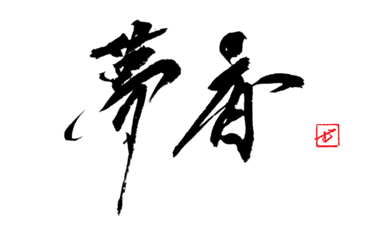
Kanji 寒 (Kan / Samui): The Character That Names Cold From Inside
2026-11-10
Two Readings, Two Temperatures
寒 carries the on-reading kan and the kun-reading samui. Kan enters words where cold is an objective condition — 寒暖 (temperature range), 防寒 (cold protection), 厳寒 (severe cold). These are words for weather reports and technical descriptions.
Samui arrives before language. The cold that moves along the studio floor when I first enter in the morning, the stiffness that gathers in my fingers while grinding ink — samui belongs to the body before it reaches the mind. When I carry samui into the character rather than kan, something in the preparation changes. The first stroke takes a different weight.
Having written 冬 (winter) and 雪 (snow) over the last few days, turning to 寒 today, I noticed my hands adjusting — a slight gathering before beginning. The character has twelve strokes, and its structure runs dense from crown to base. Before writing, I form a sense of the whole character's weight. Not a plan, but an anticipation built from many sittings with the same form.
Roof, Straw, Figure, Ice
Tracing from pictograph to kaisho, 寒 describes cold not as a property of the air but as a condition surrounding a person. The roof radical 宀 covers the whole. Below it: straw matting (廿, an older form suggesting bundled grass), a human figure crouched beneath (人), and 仌 at the base — the ancient form of ice, two 冫placed vertically.
The original image: a person wrapped in straw beneath a roof, with ice at their feet. Cold experienced from inside. Among weather characters, 暑 points toward the sun's heat, 冷 toward an object's temperature — 寒 has always pointed toward what a body feels. Three thousand years of scribes writing this character through winter practice must have known the same stiffening in their hands that I know in November.
The Three Horizontal Strokes
When writing 寒, the detail I return to most often is the spacing of three horizontal strokes inside the roof crown — the strokes derived from that bundled straw. Equal spacing makes the character rigid, something that stops rather than moves. Rather than distributing them evenly, I let the third compress slightly downward, anticipating the transition to the human figure below. The result is a character with internal direction.
Writing 寒 large on a half-sheet (35×68 cm), the relationship between those three horizontals and the ice marks at the base becomes legible only from a distance. In seiza, working at the paper, I track only the immediate stroke. After each sheet, I sit up and read the full character from across the room. Building that habit — the pause to look — required more sheets than I can estimate.
What Dry Air Teaches
November in the studio brings dry air and faster ink absorption. I first noticed this writing 雪 yesterday, and find it sharper today. The ice marks at the base of 寒 — two 冫placed one below the other — consist of fine dot-strokes in sequence. In dry air, the brush loses ink to the paper almost instantly at contact; by the second or third dot, the tip is running thin.
I first encountered this failure last winter. The lower 冫came out pale and fragmented, the character collapsing at its base. The adjustment was small: checking the brush's saturation at the edge of the inkstone before turning to the paper, loading slightly more than I would in summer. That check is now part of how I begin every sheet in cold weather. No instruction required — the dried-out characters taught it.