ARTICLE
Kanji 温 (On / Atatakai): Water, Sun, and the Warmth That Comes From Inside
2026-11-16
温 and 暖: Two Characters for Warm
Both 温 and 暖 carry the kun-reading atatakai. They are written separately for a reason: 暖 belongs to weather and air — a warm day, a warm room, warmth that arrives from outside. 温 belongs to liquids, food, and human feeling — warm soup, warm hands, the warmth already held inside a body or a vessel. 温度 (ondo), temperature. 体温 (taion), body temperature. 温泉 (onsen), hot spring. Every compound formed with the on-reading on relates to water or the body's internal heat.
Writing 暖 two days ago, I described warmth that radiates outward from the sun. 温 begins differently — the warmth is already inside, held in a vessel or a body, waiting.
Water, Sun, and Vessel
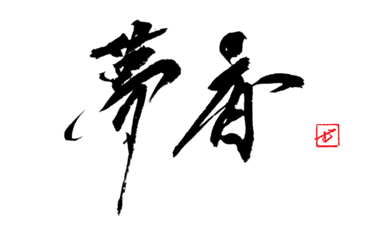
温 is built from 氵, the water radical (three strokes) on the left, and 昷 (nine strokes) on the right. 昷 is itself composed of 日 (sun, four strokes) stacked above 皿 (dish/vessel, five strokes).
氵 appears in characters grouped by water: 冷 (cold), 洗 (wash), 湯 (hot water), 泳 (swim). Within that group, 温 names neither extreme — not the cold of 冷 nor the boiling of 湯 — but the range that holds life. The right component tells a small story: a vessel (皿) with the sun (日) above it. Water, contained, warmed from above. Three thousand years of scribes have written this combination as the character for warmth that comes through contact, through containment, through the body.
The Narrow Water Radical
Twelve strokes: three left, nine right. 温 is a character where the left side must stay narrow or the right collapses.
The water radical is three strokes — a short diagonal drop, a rising flick, a longer stroke angling right. The total horizontal width of 氵 must stay at roughly one-third of the character's full width. When the water radical widens, 昷 is crowded; when it crowds, 日 loses its shape, and the whole structure tightens in the wrong way.
On the right: 日 above 皿. 日 should be nearly square — compact and closed. 皿 spreads wider, with three horizontal strokes and two verticals forming a flat, stable base. I aim for 皿 to be roughly 1.3 times the width of 日, though this varies with paper absorption and ink density. The differential matters: when both are equal, the character looks top-heavy; when 皿 spreads and 日 stays compact, the structure is grounded.
Writing large — half a sheet, 35×68 cm — the moment I most feel the balance question is in the gap between 日 and 皿. The final stroke of 日 and the first horizontal of 皿 must have a slight vertical separation. Too close, and the two elements merge into one block; too distant, and 昷 reads as two separate units.
Cold Inkstone Water
November mornings: the inkstone water is cold. I add water from the small vessel beside the desk and feel its temperature with the tip of a finger before grinding begins. It is room temperature — colder than skin on a cold morning.
As grinding proceeds, something shifts slightly — not measurable warmth, but a change in how the water moves, how the ink suspends. By the time the ink has reached working density, the water has taken on some of the motion's energy. The studio has also warmed slightly. The temperature of ink water on a cold morning never quite reaches comfortable — it stays a few degrees short. That is what 温, for me, names: not achieved warmth, but warmth in approach.
The daily practice routine changes with the season. In winter I add slightly more water to the inkstone at the start, letting the grinding run longer — the motion is how the cold body starts to move. Inside that slow warming, the character and the act align.
The water radical is narrow by design. I draw those three small strokes thinking of that ink water — present, cool, almost warm.
Ink and paper and brush in the winter cold, writing the character for warmth from inside.