ARTICLE
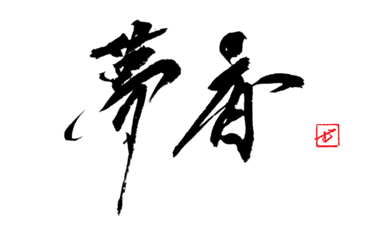
Kanji 暖 (Dan / Atatakai): The Sun Radical Inside Winter
2026-11-14
Warm and Warmed: The Readings of 暖
暖 carries the on-reading dan and several kun-readings: atatakai (warm, as an adjective), atataka, atatameru (to warm something), atatamaru (to become warm). The difference from 温 — another character also read atatakai — is established in usage: 暖 belongs to weather and air. 暖かい日差し, warm sunlight; 暖かい部屋, a warm room — warmth that comes from outside, carried by season or shelter. 温 spreads into temperature of liquids, and the warmth of people; 暖 stays with climate.
Dan enters compounds that name conditions of warmth: 温暖 (mild, temperate), 暖冬 (a warm winter — a winter that never fully hardened), 暖房 (heating — the system that holds cold outside). Every compound orients toward an equilibrium with cold, warmth as an achieved or approaching state.
Writing 寒 — cold — this week, I noticed how that character works from the outside in: cold enters through the body, through the ground. 暖 moves in the other direction. It radiates outward from a source.
The Sun Beside a Phonetic Component
暖 is built from the sun radical 日 (four strokes) on the left and 爰 (en, nine strokes) on the right, totaling thirteen strokes.
日 as a radical carries a consistent lineage: sun, time, light. Characters that use it describe light conditions or atmospheric states — 明 (bright), 晴 (clear sky), 暗 (dark). 暖 belongs to this family.
爰 appears rarely as a standalone character in modern Japanese, but lives on phonetically inside 援 (assistance) and 緩 (loosen, relent). Inside 暖, it lends its sound and lets 日 carry the meaning — sun radiating outward in a gentle, spreading motion. Three thousand years of scribes have written this pairing through winter practice.
As 冬 marks the year's closing, 暖 marks the moment cold relents. Same season, opposite angle.
Keeping the Sun Compact
Thirteen strokes — four on the left, nine on the right. 暖 is a character where the right side dominates by count. The challenge in writing it is keeping the sun radical contained.
What I return to: 日 must remain nearly square. When it widens horizontally, the boundary with 爰 blurs and the character spreads without structure. I draw the internal crossbar — the horizontal stroke inside the 日 box — slightly above the midpoint of the vertical strokes. This lifts the whole radical, keeps it tight, and creates space for 爰 to open to the right.
爰 itself moves differently in its upper and lower halves. The upper portion spreads wide, built from horizontal strokes and diagonal sweeps that push the character broad. The lower portion closes: a left-sweeping stroke that gathers the structure below. Upper opens, lower closes. When both halves spread equally, the character loses its footing.
Writing large on a half-sheet (35×68 cm), the size I give 日 determines the character's whole mood. A small sun makes it sharp — warmth contained, not yet arrived. A larger sun makes it expansive. I keep 日 slightly smaller than feels natural. The warmth of a cold morning starts small, at the desk, in a compact circle, and spreads from there.
Cold Studio, Writing Warmth
November mornings: the studio is cold when I arrive. The heating takes fifteen minutes to reach the floor. Inkstone out, water poured, grinding begins. The circular motion returns feeling to the fingers before the room returns warmth to the feet. The ink's smell rises as it thickens — that smell fills the studio at roughly the same moment the cold begins to give way.
Writing 暖 in those first minutes, hands still holding some cold from outside, the character and the moment fit together in a particular way. The vertical stroke of 日 drops cleanly only when the hand has warmed slightly — before that, the pressure is off, the line too cautious. I have written this character enough cold mornings to know: the body reads the character differently depending on where warmth is in the room.
Winter practice teaches that the character and the season are not separate things.
Ink and paper and brush in the cold, writing the character for warmth.