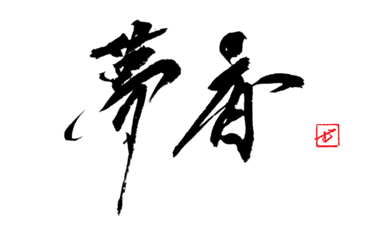
ARTICLE
Kanji 凍 (Tō / Kōru): The Character of Becoming Ice
2026-11-13
Three Readings, Three Distances
凍 carries the on-reading tō and two kun-readings: kōru (to freeze) and kogoeru (to be numb with cold). Tō enters compound words — 凍結 (freezing), 冷凍 (refrigeration), 凍傷 (frostbite) — the vocabulary of physics and medicine, water or tissue changing state from outside observation.
Kōru and kogoeru are closer to the body. 川が凍る: the river freezes — something that was in motion has stopped, the change still present in the verb. 手がこごえる: hands go numb — the moment sensation begins to leave. Neither describes ice as a finished fact. Both describe the act of becoming.
Writing 氷 yesterday — ice as noun, as state — made the difference clear. 凍 holds the transition: water is not yet ice, but is in the process of becoming it. This motion is what the character seals in.
Nisui Beside East
凍 pairs the nisui radical (冫) with 東 (east) for ten strokes. Nisui marks the solidification of water: not 氵 (sanzui), which carries liquid water and flow, but 冫, which signals arrested motion, cold, the fixing of what was fluid. Characters that carry nisui tend to concern cold or hardness: 冷 (cold), 凍 (freeze), 凋 (wither).
The right component surprises. 東 carries its own history — a character built from sun rising through or beside a tree, a sign of direction and light. Inside 凍, it surrenders that warmth and functions phonetically, lending its sound to a character about cold. As 冬 marks the closing of the year, 凍 marks the arrest of water — and the two characters share a visual logic about stillness. Three thousand years of scribes have written this combination through winter practice.
The Vertical Axis
Ten strokes: two on the left (nisui), eight on the right (東). The right side wants to spread horizontally — 東 carries many horizontal strokes, and horizontal strokes pull the character wide.
What I return to when writing 凍: nisui's two dot-strokes must hold a strict vertical axis. The first is a short, flicking stroke; the second, below it, pulls longer and more decisively to the lower right. These two dots carry different weights, but together they must assert verticality against what follows. When they equalize or lean, nisui weakens and disappears into 東's mass.
Writing large on a half-sheet (35×68 cm), I pause after the two dots, sit back, and read the character from across the room before moving to 東. Close to the paper, working in seiza, only the brush tip is visible — that distance read took many sessions to make automatic. Early: pressing both dots too heavily so they collapsed the structure; or barely marking them so they floated. 東's horizontal lines must carry varied spacing — not equidistant, but weighted so the character breathes between them. The hand learns this only by writing it wrong many times first.
Cold-Morning Ink
In November, mornings arrive when the studio falls below ten degrees. The first drops of water beaded on the inkstone before settling; the stone takes several minutes to come to room temperature. Grinding ink in those first minutes — fingers still carrying the cold from outside — the circular motion works its own slow thaw. The strokes that come before the hand is warm move differently from the ones that come after.
Writing 凍 on such a morning, hands still kogoeru while forming the character for kōru, the body and the character share a state. I cannot explain precisely what changes: whether cold shifts the ink's viscosity, or cold hands read the paper's texture differently. What I know is that winter practice has its own quality. Season and character are not separate things in the studio.
Ink and paper and brush on a cold November morning. The character holds the becoming.