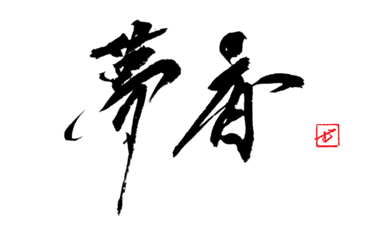
KANJI DICTIONARY
On'yomi
も
Kun'yomi
しげる
Strokes
8
JLPT
N1
Meaning
Overgrown, Grow Thick, Be Luxuriant
茂 is an 8-stroke kanji with the radical 艹 (grass). On'yomi: mo. Kun'yomi: shige(ru) — to grow thick and lush. Used as a name reading (茂, Shigeru) and in words describing abundant vegetation.
Readings
- On'yomi: mo — less common in compound words
- Kun'yomi: shige(ru) — 茂る (to grow luxuriantly), 茂み (undergrowth, thicket)
茂 appears frequently as a given name (Shigeru/Shige) expressing the wish for a life full of vitality and growth.
Meanings
- To grow thick, be lush: vegetation spreading in abundance (茂る)
- Luxuriant, overgrown: a thicket or dense growth (茂み)
- Vigorous, prosperous: by extension, flourishing in energy or activity
Etymology
艹 (grass radical) sits above 戊 (bō), which acts as a phonetic component. The combination calls up an image of grass and plants growing vigorously upward — the visual energy of 戊's broad, sweeping strokes underneath reinforces the sense of outward expansion.
Writing 茂 — Structure and Tips (8 Strokes)
茂 stacks 艹 (top) over 戊 (bottom). The secret is to keep the grass crown compact and wide, then let 戊 expand generously below it.
- Spread 艹 wide and low: the grass radical's two vertical strokes should be short; its horizontal stroke should reach broadly to each side. This forms a light canopy over 戊.
- Open 戊 with a sweeping diagonal: the long left-falling stroke of 戊 should extend freely downward and to the left. Constraining this stroke flattens the character's energy.
- Finish with the hook: the right-curving stroke of 戊 — with its characteristic rightward hook at the end — gives the character its momentum. Let it arc outward rather than pulling tight.
Script Styles
Kaisho (Regular Script)
Align 艹's horizontal stroke parallel to the top of 戊. Keep 戊's left diagonal long and open, and finish the hook stroke with a clean, confident curve.
Gyosho (Semi-Cursive Script)
Flow from 艹 directly into 戊 with a connected brush movement. Let the diagonal stroke gain speed, and carry that energy into the final hook.
Sosho (Cursive Script)
Reduce 艹 to a single horizontal gesture, then sweep through 戊 in one continuous motion. The lush vitality of "shigeru" should come through in the expansive, unrestrained final stroke.
Summary
茂 is an 8-stroke character meaning "lush" or "overgrown," formed by 艹 (grass) over 戊. On'yomi: mo; kun'yomi: shigeru. Keep the grass crown wide and low, open 戊's diagonal sweep, and end with the hook extended — this outward expansion is what gives 茂 its vitality on paper.
Tips for Writing “茂” Beautifully
- • In Kaisho (楷書), write each stroke carefully with clear stops and flicks
- • In Gyosho (行書), let the brush flow rhythmically between strokes
- • In Sosho (草書), simplify boldly while maintaining balance
- • 8 strokes total — following the correct stroke order naturally creates beautiful form
COMMISSION
This Character, Brushed as a Work
MUKYO creates commissioned calligraphy — logotypes, title lettering, and original artworks for brands and spaces, as well as live calligraphy performances. Available in Japan and worldwide.