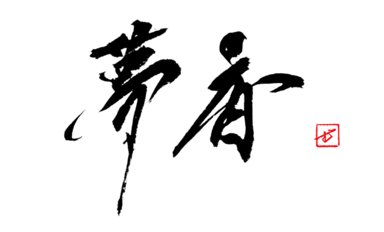
KANJI DICTIONARY
On'yomi
こう、きょう
Kun'yomi
ふさぐ、やまにれ、おおむね
Strokes
11
JLPT
N/A
Meaning
For The Most Part, Close Up, Flower Stem
梗 is an 11-stroke kanji whose radical is 木 (the "tree" radical). It is built from 木 on the left and 更 (kō) on the right — a left–right structure. Its on'yomi is こう / きょう and its kun'yomi is ふさぐ / おおむね. It appears in words such as 桔梗 (kikyō, bellflower), 脳梗塞 (nō-kōsoku, cerebral infarction), and 梗概 (kōgai, a synopsis).
Meanings of 梗
- To block, to clog — as in 脳梗塞, a passage becoming obstructed
- In outline, on the whole — 梗概, the gist or summary of a story
- The stem of a plant — also used in plant names such as 桔梗 (bellflower)
Origin of 梗
梗 is a phono-semantic compound: 木 supplies the meaning (a woody plant) and 更 (kō) supplies the sound. It first named a hard elm; from that hardness came the sense of "to clog," which later extended to "outline, gist."
How to Write 梗 — Structure (11 strokes)
Give the two sides a width ratio of roughly 3 : 7, keeping the tree radical compact so 更 can sit comfortably.
- Keep the tree radical tall and narrow. End its final right stroke as a short dot rather than a long sweep, leaving room for 更.
- Space the horizontals of 更 evenly. Lay each horizontal parallel, with equal gaps from top to bottom.
- Run one vertical through the center. Let the central vertical of 更 act as a spine, then send the final sweep down to the lower right to close the character.
Expression in Each Script
Kaisho (Regular Script)
Align the centers of the radical and 更 on one horizontal line and stack the horizontals of 更 at even intervals, sending the sweep out for stability.
Gyosho (Semi-Cursive Script)
Connect the brush flow from the radical into 更, giving the run of horizontals a rhythm while keeping the frame intact.
Sosho (Cursive Script)
Abbreviate the horizontals of 更 boldly, resolving the form with the central vertical and the final sweep so the left–right balance still reads.
Summary
梗 is an 11-stroke, 木-radical character meaning "to clog" and "in outline." Keep the tree radical tall and tight, set 更 wide, and run a vertical through its center: hold that left–right balance and even a many-stroked character stays composed.
Tips for Writing “梗” Beautifully
- • In Kaisho (楷書), write each stroke carefully with clear stops and flicks
- • In Gyosho (行書), let the brush flow rhythmically between strokes
- • In Sosho (草書), simplify boldly while maintaining balance
- • 11 strokes total — following the correct stroke order naturally creates beautiful form
COMMISSION
This Character, Brushed as a Work
MUKYO creates commissioned calligraphy — logotypes, title lettering, and original artworks for brands and spaces, as well as live calligraphy performances. Available in Japan and worldwide.