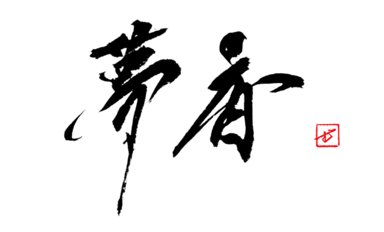
KANJI DICTIONARY
On'yomi
じゅう、にゅう
Kun'yomi
やわらか、やわらかい、やわ、やわら
Strokes
9
JLPT
N2
Meaning
Tender, Weakness, Gentleness, Softness
柔 is a 9-stroke kanji with radical 木 (tree). It reads じゅう or にゅう (on'yomi) and やわらか (kun'yomi). The character is built from 矛 (spear) above 木 (tree) — a spear bending into a tree: strength made supple. Align the center line of both components and let the lower sweeps of 木 open wide.
Readings of 柔
- On'yomi: じゅう — 柔道 (judo), 柔軟 (flexibility), 剛柔 (hardness and softness)
- On'yomi: にゅう — 柔和 (gentle, mild), 温柔 (warm and gentle)
- Kun'yomi: やわらか — 柔らかい (soft, tender); やわ (weak, flimsy); やわら
じゅう appears in contexts contrasting hardness and softness (剛柔); にゅう in compounds expressing calm temperament (柔和, 温柔).
Meanings of 柔
- Soft, supple — having elasticity rather than rigidity; 柔軟 (flexible), 柔軟体操 (stretching)
- Gentle, mild — calm in manner or words; 柔和 (mild-natured), 温柔 (warmly gentle)
- The principle of judo — yielding to force rather than resisting it; 柔道 (judo), 柔術 (jujitsu)
The shape of 矛 (something rigid) resting on 木 (something that bends) encodes the core idea: pliancy within strength.
How to Write 柔 — Structure and Stroke Order
柔 is a top-over-bottom character: 矛 above, 木 below. Keeping both components on a shared center line is what controls the feel of the character.
- Run the vertical of 矛 on the center line. Use the first downward stroke of 矛 as a spine; every stroke after it positions itself around this axis.
- Stack 矛 and 木 without shifting. Shift the center and the character looks crooked; hold it and the balance reads as supple composure.
- Open the sweeps of 木 wide. The left-sweep and right-sweep of 木 should reach outward to receive the weight of 矛 above and anchor the whole form.
Expression in Each Script
Kaisho (Regular Script)
Set each point and horizontal of 矛 evenly; keep the vertical stroke of 木 straight and extend both sweeps expressively. Clear starts, hooks, and endings give the character a composed, upright quality.
Gyosho (Semi-Cursive Script)
Carry the brush from 矛 into 木 with a connected flow. Allow the sweeps of 木 to curve slightly — the script style suits the character's meaning of softness.
Sosho (Cursive Script)
Abbreviate boldly while keeping the center line. A single supple axis through the whole form is the mark of skill: pliancy as both meaning and method.
Summary
柔 is a 9-stroke, 木-radical character meaning soft, gentle, and the yielding principle of judo. Align 矛 and 木 on one center line, then open the lower sweeps of 木 to receive: that balance is the character in motion.
Tips for Writing “柔” Beautifully
- • In Kaisho (楷書), write each stroke carefully with clear stops and flicks
- • In Gyosho (行書), let the brush flow rhythmically between strokes
- • In Sosho (草書), simplify boldly while maintaining balance
- • 9 strokes total — following the correct stroke order naturally creates beautiful form
COMMISSION
This Character, Brushed as a Work
MUKYO creates commissioned calligraphy — logotypes, title lettering, and original artworks for brands and spaces, as well as live calligraphy performances. Available in Japan and worldwide.