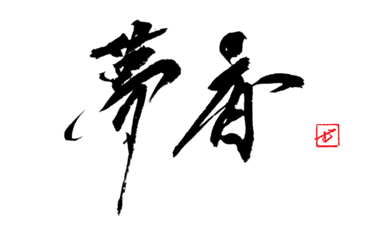
KANJI DICTIONARY
On'yomi
りょく、ろく
Kun'yomi
みどり
Strokes
14
JLPT
N2
Meaning
Green
緑 means "green" in Japanese — the color of leaves, young shoots, and living things. Read as ryoku / roku (on'yomi) or midori (kun'yomi). It is a phono-semantic compound: the silk radical 糸 on the left, and 彔 (roku, depicting water dripping from stone) on the right supplying both sound and image of dye flowing through silk thread. 14 strokes, JLPT N2, Grade 3.
Reading 緑
- On'yomi: ryoku — 緑地 (ryokuchi, green area), 緑化 (ryokka, urban greening), 新緑 (shinryoku, fresh spring foliage); roku — 常緑 (jōryoku, evergreen), 深緑 (fukamidori, deep green)
- Kun'yomi: midori — 緑色 (midori-iro, the color green); also widely used as a given name
Meaning of 緑
- Green: the color of plants and leaves — between blue and yellow in the spectrum
- Nature and green spaces: 緑地 (ryokuchi, green park), 緑化 (ryokka, greening of an area)
- Fresh vitality: 新緑 (shinryoku, the vivid new growth of early summer) evokes youth and natural energy
Origin of 緑
緑 is a phono-semantic compound (形声字 keisei-ji). The left element 糸 (itō, silk radical) supplies meaning — silk thread, the process of dyeing. The right element 彔 (roku) supplies the sound ryoku and depicts water flowing from stone, evoking dye permeating silk fibers. From the image of silk dyed in plant-water came the color name "green."
- Radical: 糸 (silk / thread)
- Strokes: 14
- Phonetic component: 彔 (roku)
Writing 緑 in Calligraphy
緑 is a left–right compound: 糸 on the left (one-third width), 彔 on the right (two-thirds). The key is to keep 糸 tall and narrow so it yields space to 彔.
Write the thread radical 糸 compactly: the upper 幺 tightly, a short crossbar, then the three base dots — left, center, right — in a clean row. Keep the entire radical tall and narrow. For the upper part of 彔, stroke leftward then fold back and descend on a line close to the character's center. The lower strokes of 彔 spread left and right from this vertical: the left stroke turns slightly inward, the right stroke opens outward to widen the base.
Align the tops of 糸 and 彔. The character's weight sits in the lower center.
Gyosho (semi-cursive)
Simplify the three base dots of 糸 into a flowing curve; transition smoothly into 彔. Aim for one continuous downward movement through the right side.
Sosho (cursive)
Abbreviate 糸 boldly and drive the vertical energy of 彔 downward in a single motion, letting the base strokes fan naturally at the finish.
Tips for Writing “緑” Beautifully
- • In Kaisho (楷書), write each stroke carefully with clear stops and flicks
- • In Gyosho (行書), let the brush flow rhythmically between strokes
- • In Sosho (草書), simplify boldly while maintaining balance
- • 14 strokes total — following the correct stroke order naturally creates beautiful form
COMMISSION
This Character, Brushed as a Work
MUKYO creates commissioned calligraphy — logotypes, title lettering, and original artworks for brands and spaces, as well as live calligraphy performances. Available in Japan and worldwide.