KANJI DICTIONARY
On'yomi
けい
Kun'yomi
よろこび
Strokes
15
JLPT
N1
Meaning
Jubilation, Congratulate, Rejoice, Be Happy
慶 (kei / yorokobi) is a 15-stroke Junior High kanji meaning "celebrate, joy, auspicious." It appears in 慶事 (keiji — auspicious occasion), 慶賀 (keiga — congratulations), and 慶應 (Keiō — the university founded by Fukuzawa Yukichi).
Readings of 慶
- On'yomi (Sino-Japanese): けい — kei
- Kun'yomi (Native Japanese): よろこ(び) — yorokobi
In on'yomi compounds: 慶事 (keiji), 慶賀 (keiga), 慶典 (keiten — ceremonial celebration), 慶長 (Keichō — historical era name). In names, 慶 is read けい (Keiko, Keiji), よし (Yoshinori), or ちか depending on the name.
Meaning of 慶
- Celebrate, congratulate: marking joyful occasions with others (慶事, 御慶)
- Joy, happiness: a fortunate turn of events or blessings (慶福, 慶運)
- Auspicious: favorable omens and celebratory occasions (慶典, 年賀)
慶事 covers all celebratory events — weddings, births, decorations — and stands as the antonym of 弔事 (chōji, mourning).
Origin of 慶
慶 originally depicted a person carrying a deer skin as a ceremonial gift — an ancient gesture of congratulation. The character combines 广 (a slanted roof radical, madare) at the top, an abbreviated form of 鹿 (deer) in the center, 心 (heart) below that, and 夂 (footsteps arriving from behind) at the base. Someone walking to a celebration, bearing a gift, with a joyful heart — that image is the root of this kanji.
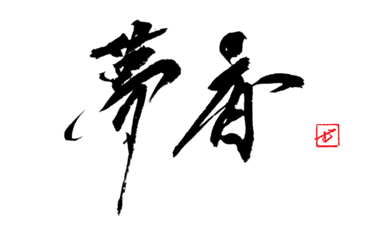
Writing 慶 in Calligraphy — 15 Strokes
With 15 strokes spread across three layers, maintaining the vertical centerline is essential.
- Stretch 广 wide: 广 (madare) spans the full width; keep the horizontal stroke broad to shelter all components below. Note: this is not 宀 (ukanmuri) — it is the slanted madare radical.
- Compress the middle: The abbreviated deer form in the center should stay compact and centered, not spreading outward.
- Anchor with 心: The three dots of 心 (heart) provide visual balance — keep them evenly spaced, with the final sweep flowing downward.
- Close with 夂: The diagonal sweep of 夂 completes the structure; allow it room to breathe toward the lower right.
Kaisho (Regular Script)
Build each layer cleanly — 广 → central body → 心 → 夂 — keeping the vertical axis throughout.
Gyosho (Semi-Cursive Script)
Let the brush flow from 广 downward, connecting the central body through 心 and 夂 in a single rhythmic movement.
Sosho (Cursive Script)
Abbreviate the central portion into a compact gesture; let 心 and 夂 define the character's presence through their sweeping lines.
Summary
慶 (kei) means "celebrate, joy, auspicious" — 15 strokes, heart radical (心). Used in congratulatory language, proper nouns, and names. In calligraphy: stretch 广 wide, keep the middle compact, and let the 心 and 夂 sweeps carry the feeling of joy outward.
Tips for Writing “慶” Beautifully
- • In Kaisho (楷書), write each stroke carefully with clear stops and flicks
- • In Gyosho (行書), let the brush flow rhythmically between strokes
- • In Sosho (草書), simplify boldly while maintaining balance
- • 15 strokes total — following the correct stroke order naturally creates beautiful form
COMMISSION
This Character, Brushed as a Work
MUKYO creates commissioned calligraphy — logotypes, title lettering, and original artworks for brands and spaces, as well as live calligraphy performances. Available in Japan and worldwide.