ARTICLE
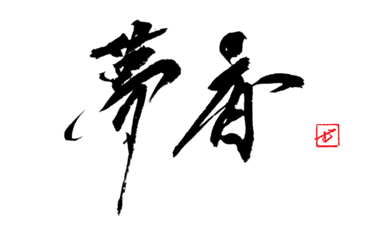
Kanji 怒 (Ikaru/Okoru/Do): Anger, Readings, and How to Write It
2026-11-27
Ikaru and Okoru — One Character, Two Kinds of Anger
怒 has two kun-readings that map onto different aspects of the same emotion. Ikaru names anger as it rises inside — heat building before it reaches anyone. Okoru names anger as it moves outward: a voice that sharpens, an action taken from inside the feeling rather than around it.
The on-reading is do: 怒号 (dogō, angry roar), 憤怒 (fundo, fury), 喜怒哀楽 (kidoairaku, the full arc of human feeling — joy, anger, sorrow, pleasure). In compounds, do carries a heavier register. It lifts the feeling out of a moment and places it in a larger human catalogue. 怒鳴る (donaru, to shout) grafts the Chinese sound onto a Japanese word for resonance — the voice filling a space.
Slave, Hand, Heart — The Making of 怒
怒 is a phono-semantic character. The upper component, 奴 (do, 5 strokes), carries the sound. The lower component, 心 (shin, heart, 4 strokes), carries the meaning.
奴 is built from 女 (woman, 3 strokes) and 又 (hand/action, 2 strokes). Its original meaning — a woman with hand extended in labor, later servitude — plays no role here. 奴 appears in 怒 as a phonetic carrier only: it tells you how to read the character, not what it means. This borrowing of sound across meaning is ordinary practice across three thousand years of written Chinese and Japanese.
The lower 心 appears here in its radical form: stretched flat across the bottom, bearing three dots. 心 as a standalone character is four strokes, three of them dots — an unusually unstable structure for the most central concept in the script. As a radical it settles, flattens, and anchors the character above it.
Nine Strokes — The Three Dots That Carry the Anger
The upper component is not difficult. 女 is written in three strokes: horizontal, the folded body stroke, the sweeping diagonal. Then 又: a bent downward stroke, then the hook and fold. The challenge in 奴 is restraint — keep the horizontal of 女 short enough that the heart below has room. When I write 怒 on half-cut paper (35×68cm), I deliberately compact the upper half. All the character's energy should collect at the bottom.
The three dots of 心 determine how the character feels. When I write them evenly spaced and equidistant, the anger looks resolved — it has already cooled. What I do instead: angle the left dot slightly inward, let the right dot sweep outward with a little more extension. I exhale as I write them. Held breath makes the dots rigid; a quiet exhale lets each one open at its end.
The relationship between emotional content and line quality is not simple — writing a character that means anger does not mean the line should look angry. The opposite is usually true. Rough lines don't express emotion; they express lost technique. The feeling belongs in the structure, not the execution.
Writing Anger
Writing the same character several hundred times teaches something difficult to describe before it happens. Early on, the meaning is present. Anger is what I am writing. By the two hundredth sheet, the meaning recedes. What remains is the angle of 奴's diagonal and the spacing between the three dots.
This is not distance from anger — it is arrival at its form. When a feeling becomes a shape you can handle exactly, the character is yours.
Ink and paper and brush. The character for anger, written in stillness.