ARTICLE
Chisoku — Writing the Zen Phrase 'Knowing What Is Enough'
2026-07-08
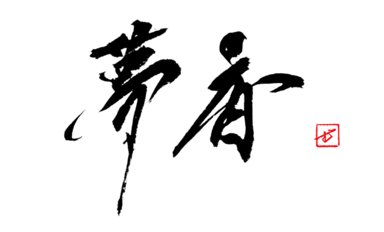
Two Characters: 知足
Ware tada taru wo shiru — "I simply know what is enough." The phrase is famously carved into the stone water basin at Ryoan-ji temple in Kyoto.
Chisoku (知足) is not about endurance or giving things up. Instead of counting what is missing, it means noticing the richness of what is already here — a quiet affirmation that this moment is already full.
Writing a Zen Phrase
When writing a Zen phrase, the line must not merely explain the meaning.
For chisoku, the line itself has to be sufficient. Ornament is stripped away; the amount of ink, the speed of the brush, the space used on the paper — only what is needed, and nothing more. If the writer is not at peace, no stillness reaches the viewer.
Ink, paper, and brush. A tradition of more than three thousand years has stood on these three things alone. The very austerity of the tools resonates with the idea of chisoku.
Reaching a Single Sheet
Two characters, written vertically on a half-sheet of paper, 35 by 68 centimeters. People assume two characters must be easy. In fact, the fewer the strokes, the more each one has to carry. There is nowhere to hide.
I decided to write these two characters not in pure black but in aozumi, blue-toned ink. Pure black asserts itself too strongly; it fights the stillness of "knowing what is enough." A black with a hint of blue, pulled back a little. I grind the ink, test it on scrap paper, and only face the real sheet once the tone is right.
The hardest part was the final stroke of 足. Sweep it long and the line grows talkative; stop it short and it turns rigid. Full, yet still leaving white space — I could not find that balance, and the discarded sheets on the floor climbed past twenty. My knees went numb in seiza; the faintly sweet, heavy smell of animal glue filled the room. On the twenty-first sheet, I finally saw where the brush should stop. The line that had stopped counting was the one most at peace. Knowing what is enough, it seems, is something the writing hand learns first.
Chisoku Inside an Exhibition Space
In August 2026, my first solo exhibition "Zen" was held at Palette Gallery in Azabu-Juban, Tokyo, presenting new works drawn from Zen phrases.
The space was composed of three elements: calligraphy, fragrance, and sound. Walking pace slowed; visitors found themselves pausing in front of a single work. If those few minutes became a moment of knowing what is enough, the exhibition had done its work.
If a single Zen phrase — chisoku, or another word you carry — belongs on a wall or in a space you care about, commissioned work is available.