ARTICLE
Coming Back to the Brush as an Adult — What to Return To
2026-07-15
The First Stroke After Ten Years Rarely Behaves
I have watched many adults make their first stroke after years away from the brush, and it is almost always stiffer than they remember. Between the hand that once traced a model sheet as a child and the hand that moves now, ten years of other habits have wedged themselves in. A hand that types all day and signs little by hand tenses up the harder it tries to hold the brush "correctly." The line refuses to come out as imagined, and many people set the brush down thinking, this isn't how it was.
But I read that stiffness as proof the hand is coming back. A hand that had truly forgotten would not tense at all. It tenses because some part of the body is searching for an old sensation. So the first thing to do when restarting is not to write well, but to let the tension go.
You Return to the Quality of the Time, Not to Skill
The saddest thing I see in adults restarting is the rush to recover the writing of the year they were most skilled. Memories of ranks and certificates get in the way. I believe you don't need to go back there — and the reason is simple. The time an adult spends with the brush is a different kind of time altogether from a child's practice.
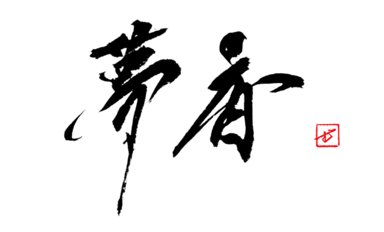
As a child I wrote block script as many times as my teacher told me to. The adult writing that same script now notices the smell of ink with each stroke, the numbness in the knees from sitting seiza, the moment the sounds outside the window fall away. That sensitivity was not available to the child. So I tell people returning to the brush: before copying the classics, take one character you like — 無, "nothingness," or a character from your own name — and write it ten times, varying the darkness of the ink. Not to judge good or bad, but as time to see how your line comes out today. That alone turns calligraphy from homework into a conversation.
The Tools Don't Have to Be the Old Ones
Many people restart with whatever they pull out of the closet: hardened liquid ink, a brush with a split tip, an inkstone dried into cracks. The brush, at least, I tell them to buy again. A child's thin brush is often too small for an adult hand. For block script on a half-sheet, one medium kengo brush with a tip four or five centimeters long is enough. It does not need to be expensive.
I have felt this myself. After a stretch away from the brush, the first line I made came out like another person's, and it unsettled me. I wrote dozens of sheets in a panic, and the lines only grew stiffer. What saved me was the day I stopped counting progress and decided to grind the ink carefully for three minutes and nothing more. In those three minutes, while the faintly sweet smell of animal glue rises, the hand has already begun to write. Restarting is returning to those quiet three minutes.
For choosing that first brush, see How to Choose Your First Brush; for releasing the tension, Posture and Breathing. On the meaning of the stretch when nothing comes out right, read Shu-Ha-Ri. What you return to is not your old skill, but the line you make now.