ARTICLE
Shodo and the Art of Letter Writing — Beauty Born from Japanese Epistolary Culture
2026-06-24
Shodo and the Art of Letter Writing — Beauty Born from Japanese Epistolary Culture
Even in an age of instant messages and emails, a handwritten letter carries a power that no digital medium can replicate.
Grinding ink while thinking of the recipient. Guiding the brush across the paper. Leaving something of yourself behind in every stroke. This is why calligraphy and letter writing have been inseparable for more than a thousand years in Japan.
What Is Shōsoku-tai?
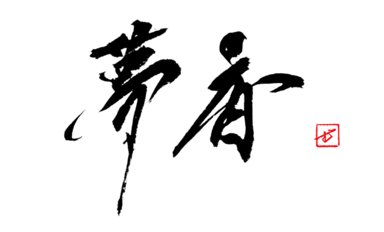
In the world of Japanese calligraphy, the word shōsoku (消息) means "letter" or "personal correspondence."
When hiragana was developed during the Heian period (794–1185), the aristocracy began writing informal letters in the flowing new script, distinguishing them from the formal shōjō (書状) written in Chinese-influenced characters. Letters written in kana were called kana-shōsoku or onna-shōsoku — "woman's letters" — and they gave birth to a unique aesthetic style in the history of Japanese calligraphy.
Unlike formal kaisho or gyōsho scripts, shōsoku-tai flows in a continuous stream of cursive kana. The white space between lines, the shifting size of characters, the bleed and blur of ink — all of it mirrors the emotional currents of the writer. These are living letters.
The Era When Letters Perfected Calligraphy
In the Heian imperial court, the exchange of letters was the heartbeat of cultural life.
A poem composed and sent by letter; a reply composed and returned within moments. The handwriting itself was a measure of the sender's refinement and education. How you wrote said as much as what you wrote.
Fujiwara no Yukinari (972–1027), one of the celebrated "Three Brushes of the Heian Era," left behind letters that transcend mere correspondence and stand as masterpieces of art. His unbroken flow of kana, his masterfully calibrated empty space — these gave rise to the technique known as chirashi-gaki (scattered writing), which became foundational to all later kana calligraphy.
The Birth of Chirashi-gaki
One of the most important calligraphic techniques to emerge from letter culture is chirashi-gaki — "scattered writing."
Rather than aligning lines uniformly, letters were written with intentionally varied line heights, creating visual rhythm and movement. Long lines alternated with short ones; ink density shifted to create depth and perspective. The result was a page that breathed — text arranged as a landscape painting, where characters seem to drift across the paper like clouds.
This technique survives in modern kana calligraphy exhibitions to this day. A form born from intimate personal correspondence became one of Japan's most distinctive art traditions.
What Warlords' Letters Reveal
The epistolary tradition was not confined to the Heian court. The handwritten letters of Japan's feudal warlords are also treasured as calligraphic masterpieces.
Oda Nobunaga, Toyotomi Hideyoshi, Tokugawa Ieyasu — each man's letters pulse with his personality. Nobunaga's brushwork is swift and forceful; Hideyoshi's is broad and exuberant; Ieyasu's is composed and precise. Letters reveal what their writers never intended to show.
Historians read not only the content of these letters but the handwriting itself, using it to understand emotional states and circumstances that no official record preserves. Calligraphy and letter writing have always been history's most intimate archive.
The Ritual of Writing a Letter
Writing a letter was once an art in itself — a complete ceremony from beginning to end.
- Grinding the ink — Moving the inkstick slowly while thinking of the recipient was a meditation, a preparation of the spirit
- Choosing the paper — Washi was selected to match the season, the relationship, the mood
- The opening — A seasonal greeting came first, then gentle attention to the reader before the writer's own words
- The seal — Even the folding and closing of the letter held layers of courtesy
Even today, many people in Japan reach for a brush when writing a formal letter of gratitude or congratulation. A handwritten letter communicates something that no typed message can: the time and care that went into its creation.
The Joy of Being Received
When someone receives a letter written with a brush, they feel something before they read a single word.
The scent of ink. The texture of the paper. The rhythm of the strokes. These carry messages that words alone cannot. Where digital text is uniform and voiceless, handwritten characters contain the presence of another person in every mark.
What the shōsoku tradition ultimately teaches is that a letter is not a vehicle for information — it is a way of delivering yourself to another person.
The Spirit of Shōsoku in the Modern World
Perhaps because we are so saturated with digital communication, handwritten letters feel more alive than ever.
Calligraphy students increasingly write not only formal seasonal greetings but everyday letters with a brush. Sitting with paper and ink, tracing each character with care while picturing the person who will receive it — this is its own form of practice, a quiet and rich counterpart to formal calligraphy study.
The aesthetic sensibility that Heian aristocrats refined in their intimate correspondences lives on, in changed form, in the hands of everyone who picks up a brush and writes a letter today.
To write a letter by hand is to join a thread that stretches back a thousand years. And there is something in that — something worth pausing over — before the first stroke of ink meets the page.
Thinking of writing your first brush letter? Start with just one line. "Thank you for everything" — written slowly, intentionally — is more than enough.