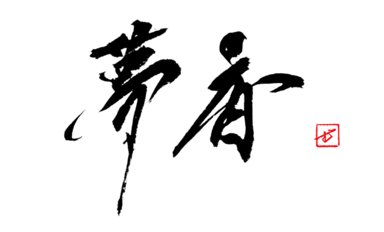
MUKYO

ARTICLE

The Art of Rakkan: Signatures and Seals That Complete a Calligraphy Work

2026-04-02

Introduction — What Is Rakkan?

When admiring a piece of Japanese calligraphy, your eyes naturally gravitate toward the bold brushstrokes of the main text. But look to the lower left corner, and you'll find something equally important: a delicate signature accompanied by a vivid vermilion seal stamp. This is rakkan (落款).

The word "rakkan" is an abbreviation of rakusei kanshi (落成款識), meaning "inscription upon completion." It refers to the combination of the artist's signature and seal that marks a work as finished and authenticated. But in shodo (Japanese calligraphy), rakkan is far more than a signature — it is an integral part of the composition, a balancing element, and a statement of the artist's identity.

As MUKYO, I believe rakkan is the final breath that gives a work its soul. Let me guide you through everything you need to know about this essential element of calligraphy.

A Brief History of Rakkan

The tradition of signing artwork originated in China. During the Tang Dynasty (618–907), artists began inscribing their names on paintings and calligraphy, though many works were left unsigned out of modesty.

By the Song Dynasty (960–1279), literati artists embraced rakkan enthusiastically. They recorded not just their names but also dates, locations, dedications, and even poems — creating what's known as chōkan (長款, "long inscription").

The practice reached Japan during the Kamakura period, carried by Zen monks who brought Chinese calligraphy and painting traditions. Over centuries, Japanese calligraphers developed their own rakkan conventions, blending Chinese tradition with Japanese aesthetic sensibility.

Today, rakkan serves as both authentication and artistic expression — a mark of completion that elevates the work.

Components of Rakkan

Rakkan consists of two main elements: the kanki (款記, written signature) and the inshō (印章, seal stamp).

Kanki — The Written Signature

The kanki is the signature written with brush and ink. There are several styles:

Tankan (単款): Simply writing your name or art name. The most common form in modern calligraphy exhibitions.

Sōkan (双款): Including both the recipient's name (upper inscription) and your own name (lower inscription). Used for gift pieces.

Chōkan (長款): A detailed inscription including date, location, and context. Found in formal or literary works.

One key principle: the kanki should be smaller and more modest than the main text. The signature is a supporting player, not the star. It should complement the work without competing for attention.

Inshō — The Seal Stamp

The seal stamp is rakkan's most visually striking element. That flash of vermilion brings life and warmth to the monochrome world of ink and paper.

The main types of seals used in calligraphy are:

Seimei-in (姓名印): A seal bearing your real name or art name. The most fundamental type.

Gagō-in (雅号印): A seal with only your art name. Often used alongside the seimei-in.

Yū-in (遊印): A "leisure seal" carved with a favorite phrase or motto. Sometimes used as a kanbō-in (関防印) placed at the upper right of a work.

Inshu-in (引首印): A seal placed at the beginning (upper right) of a work, often rectangular or oval, marking the work's opening.

Carving Styles — Shubun and Hakubun

Seals come in two fundamental carving styles:

Shubun (朱文, relief carving): The characters appear in vermilion against a white background. The surrounding stone is carved away, leaving the characters raised. This produces a bright, elegant impression.

Hakubun (白文, intaglio carving): The characters appear white against a vermilion background. The characters themselves are carved into the stone. This creates a bold, dignified impression.

Traditionally, the seimei-in uses hakubun while the gagō-in uses shubun, but modern calligraphers often choose based on the mood of the work rather than strict convention.

My own MUKYO seals were specially carved by a professional seal artist. While carving your own seal is a wonderful experience, I recommend commissioning important seals from a skilled tenkoku (篆刻) artisan.

Art Names — Your Identity as a Calligrapher

Central to rakkan is the gagō (雅号) — your art name. This is the name you use in your calligraphy practice, distinct from your given name. It may be bestowed by a teacher or chosen personally.

A good art name should be beautiful in sound, rich in meaning, and reflective of your artistic philosophy.

My art name, MUKYO (無響), means "silent resonance." Calligraphy is a silent art, yet masterful works resonate with something beyond sight and sound. I wanted my name to honor that invisible power.

Tips for choosing an art name:

  • Draw from nature: mountains, water, wind, moon
  • Express your ideals: choose characters that reflect your artistic values
  • Consider the sound: it should feel pleasant when spoken aloud
  • Think about visual balance: how will it look written as part of your rakkan?

Stamping Technique — A Practical Guide

Now for the hands-on part. Here's how to stamp a beautiful seal impression.

What You'll Need

  • Your seal (inshō)
  • Seal paste (indei) — a dense vermilion paste, very different from standard ink pads
  • A seal guide ruler (inku) — an L-shaped tool for alignment (optional but helpful)
  • A firm but slightly cushioned surface underneath

Applying Seal Paste

Gently tap the seal face into the paste with a light bouncing motion. Never grind or twist it — that leads to uneven paste distribution and messy impressions.

Aim for a thin, uniform coating across the entire seal face. Too much paste creates a blotchy print; too little produces a faded one. Practice will teach you the right amount.

Stamping Steps

  1. Position: Use the guide ruler or carefully judge the placement by eye
  2. Lower straight down: Keep the seal level so the entire face contacts the paper evenly
  3. Apply even pressure: Press firmly from above, distributing weight across the whole seal
  4. Lift straight up: Don't slide or twist — pull directly upward

The most common mistake is uneven pressure. Right-handed people tend to press harder on the right side, so consciously distribute force to the left as well.

Placement Guidelines

  • Seimei-in / Gagō-in: Below the written signature
  • Inshu-in: Upper right corner of the work
  • Yū-in: In the margins, placed for visual balance

Pay attention to the spacing between seals and between seals and the edges of the paper. Not too crowded, not too far apart — this sense of balance is what separates a polished rakkan from a careless one.

What Rakkan Brings to a Work

Calligraphy exists in two colors: the black of ink and the white of paper. Rakkan introduces a third color — vermilion — that brings warmth, vitality, and visual punctuation to the monochrome world.

The placement of rakkan also profoundly affects the overall composition. A work with text weighted to the right gains balance from a rakkan placed at the lower left. In a work with generous white space, the rakkan creates a visual pathway that guides the viewer's eye.

As a calligrapher, the moment I stamp my seal is my favorite part of the process. It's the moment the work is declared complete, and the moment I accept responsibility for everything the piece expresses.

Conclusion

Rakkan is the "final brushstroke" of a calligraphy work. No matter how beautifully the main text is written, a careless rakkan diminishes the entire piece. Conversely, a well-executed rakkan elevates the work and adds a layer of refinement.

Whether you're just beginning your calligraphy journey or have years of experience, I encourage you to invest time in your rakkan. Practice your signature, commission a personal seal, and approach each rakkan with the same care you give the main text. This attention to detail will deepen and enrich your calligraphy practice.

If you'd like to learn more about rakkan or are interested in having a personal seal created, please feel free to reach out through MUKYO's calligraphy workshops and classes.

WRITTEN & SUPERVISED BY

MUKYO

Tokyo-based calligrapher blending traditional Japanese calligraphy with contemporary art. Sharing the beauty of shodo to 66K+ followers on TikTok.