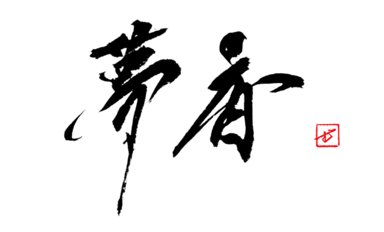
KANJI DICTIONARY
On'yomi
AI
Kun'yomi
ito(shii), mana
Strokes
13
JLPT
N3
Meaning
love, affection, compassion
The Origins of 愛
The kanji 愛 is one of the most profound and beautiful characters in the Japanese writing system. As a compound ideograph (会意文字, kaii moji), it weaves together multiple elements to create a single, powerful meaning.
At the top, 爫 (souyou) represents a hand reaching out. Below it, 冖 (wakanmuri) symbolizes a covering or embrace. At the very heart of the character sits 心 (kokoro) — the heart, the mind, the soul. And at the base, 夂 (suinyou) depicts feet moving slowly and deliberately.
Together, these elements paint a vivid picture: a person walking slowly toward another, heart open, hand outstretched, ready to embrace. This is love as the ancient Chinese understood it — not a sudden rush of emotion, but a deliberate, whole-hearted movement toward another person.
Writing 愛 in Calligraphy
For a calligrapher, writing 愛 is both a technical challenge and a deeply personal act. The character demands 13 precise strokes, each contributing to the overall balance and beauty of the composition.
Kaisho (Regular Script)
In kaisho, the formal style of calligraphy, every stroke of 愛 must be carefully placed. The upper radical 爫 requires three distinct strokes with even spacing. The horizontal stroke of 冖 establishes the character's structural foundation — it must be written with confidence and stability.
The heart radical 心 at the center is the emotional core of the character. Its three dots and connecting stroke must be placed with particular attention to spacing and rhythm. The final component 夂 anchors the character, providing a stable base that suggests rootedness and permanence.
Gyosho (Semi-Cursive Script)
In gyosho, the calligrapher allows the brush to flow more freely between strokes. The rigid precision of kaisho gives way to natural, organic connections. The heart radical in particular benefits from this fluidity — the three dots can be written in a single, flowing motion that captures the dynamic, ever-changing nature of love.
This style adds warmth and humanity to the character. Where kaisho presents love as an ideal form, gyosho shows love as a living, breathing emotion.
Sosho (Cursive Script)
In sosho, 愛 undergoes a dramatic transformation. Strokes are boldly abbreviated, and the entire character may be rendered in just a few sweeping movements. What remains is pure emotion — the essence of love stripped of all unnecessary structure.
A sosho rendering of 愛 pulses with life. The rhythm of the brush mirrors the rhythm of a heartbeat — powerful yet delicate, bold yet tender. It is in sosho that the calligrapher's personal relationship with love becomes most visible.
Compound Words and Cultural Significance
愛 appears in countless Japanese compound words, each illuminating a different facet of love:
- 愛情 (aijou) — deep affection and tenderness toward another person
- 愛着 (aichaku) — a warm attachment born of familiarity and fondness
- 博愛 (hakuai) — universal love, love for all humanity
- 愛国 (aikoku) — love of country, patriotism
- 恋愛 (ren'ai) — romantic love between partners
- 慈愛 (jiai) — compassionate, nurturing love
In Buddhist philosophy, 愛 carries an additional nuance of attachment and desire (愛欲, aiyoku), reminding us that love can bind as well as liberate. When Christianity arrived in Japan, the concept of agape — divine, unconditional love — expanded the character's meaning further, creating a rich tapestry of interpretations that continues to evolve.
愛 in Performance Calligraphy
When I perform 愛 in live calligraphy, I channel my entire body into the brushwork. Standing before a large sheet of paper, I use not just my wrist and arm, but my whole body — my legs provide stability, my core generates power, and my breath guides the rhythm of each stroke.
The moment the brush touches paper, there is a sound — a whisper between bristle and fiber. Ink splashes. The audience holds its breath. And in the space of a few seconds, 愛 appears — raw, immediate, and alive.
This is the magic of calligraphy: it transforms an abstract concept into a physical, tangible thing. Even viewers who cannot read Japanese can feel the emotion embedded in the brushwork. The speed of the stroke, the weight of the ink, the space between the lines — all of these communicate love in a language that transcends words.
Summary
The kanji 愛 is a masterpiece of visual storytelling. In just 13 strokes, it captures one of humanity's most fundamental emotions — the desire to reach out, to embrace, and to walk gently toward another soul.
Writing 愛 in calligraphy is an act of meditation. Each stroke is an opportunity to reflect on what love means — to the writer, to the viewer, and to the world. Whether rendered in the precision of kaisho, the warmth of gyosho, or the raw energy of sosho, 愛 speaks to the universal human experience of connection and compassion.
Tips for Writing “愛” Beautifully
- • In Kaisho (楷書), write each stroke carefully with clear stops and flicks
- • In Gyosho (行書), let the brush flow rhythmically between strokes
- • In Sosho (草書), simplify boldly while maintaining balance
- • 13 strokes total — following the correct stroke order naturally creates beautiful form
COMMISSION
This Character, Brushed as a Work
MUKYO creates commissioned calligraphy — logotypes, title lettering, and original artworks for brands and spaces, as well as live calligraphy performances. Available in Japan and worldwide.