ARTICLE
Gyosho Basics: A Beginner's Guide to Semi-Cursive Japanese Calligraphy
2026-03-19
Gyosho Basics: A Beginner's Guide to Semi-Cursive Japanese Calligraphy
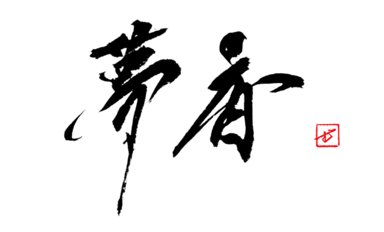
Once you've gained confidence writing kaisho (block script), the natural next step is gyosho (行書) — the semi-cursive style that sits between the precision of kaisho and the flowing abstraction of sosho (cursive).
Gyosho is arguably the most practical calligraphy style in Japan. The elegant writing you see on greeting cards, ceremonial envelopes, and personal letters is almost always gyosho. It balances beauty with legibility — and that's exactly what makes it so powerful.
As a calligrapher, gyosho is the style I use most in my work. The freedom it gives you — to find your own rhythm, to let the brush flow — elevates calligraphy from careful practice to genuine self-expression.
In this guide, I'll walk you through the core principles, practical techniques, and practice methods for learning gyosho.
What Is Gyosho?
Gyosho originated in China during the Later Han dynasty (1st–3rd century CE). While kaisho requires lifting the brush between each stroke, gyosho connects strokes and simplifies forms, creating a flowing, rhythmic writing style.
Where It Fits Among the Five Scripts
Japanese calligraphy has five main scripts:
- Kaisho (楷書): Block script — each stroke clearly separated, highly legible
- Gyosho (行書): Semi-cursive — strokes connected with maintained readability
- Sosho (草書): Fully cursive — heavily simplified, artistic but harder to read
- Reisho (隷書): Clerical script — horizontal emphasis, historical
- Tensho (篆書): Seal script — the most ancient form
Gyosho's greatest strength is its balance of beauty and readability. It's expressive enough to feel alive, yet clear enough for anyone to read.
How Gyosho Differs from Kaisho
Understanding the specific differences helps you make the mental shift from kaisho to gyosho.
Starting Strokes (Kihitsu)
In kaisho, you place the brush firmly on the paper with a deliberate "press" before each stroke. In gyosho, the entry becomes lighter and more natural — the brush glides onto the paper from the air, creating a smoother beginning.
Stroke Movement (Sohitsu)
Kaisho strokes maintain consistent thickness. Gyosho introduces dynamic variation — faster movements create thinner lines, while slower, pressed movements create thicker ones. This push-and-pull rhythm is the heartbeat of gyosho.
Ending Strokes (Shuhitsu)
Kaisho endings are definitive — clear stops, hooks, and sweeps. In gyosho, the ending of one stroke often flows into the beginning of the next, creating visual connections between elements.
Renmen (連綿) — Connected Strokes
The defining feature of gyosho is renmen: connecting strokes without lifting the brush. This creates fluid transitions between strokes and sometimes between entire characters. However, connecting everything would create chaos — the art lies in choosing where to connect and where to break.
Five Fundamental Rules of Gyosho
Rule 1: Maintain Stroke Order
Even when simplifying or connecting strokes, follow the standard stroke order. Correct stroke order ensures natural flow. Changing it creates awkward, forced connections that look unnatural.
Rule 2: Choose Your Connections Wisely
Not every stroke should connect. Common natural connections include:
- Horizontal to vertical transitions (as in 十)
- Left sweeps flowing into the next stroke (as in 大)
- Dots connecting to following strokes (as in 文)
Some breaks actually enhance beauty. Contrast between connection and separation is essential.
Rule 3: Soften the Corners
Kaisho has sharp, angular turns. Gyosho rounds these corners. The character 口 (mouth), which is strictly rectangular in kaisho, becomes softer and may even be written in a single continuous stroke.
Rule 4: Simplify Strategically
Gyosho allows stroke simplification — as long as the character remains recognizable:
- The radical in 道 becomes streamlined
- Repeated horizontal strokes in 言 may be reduced
- Dots may merge into connecting lines
The golden rule: simplify only as far as readability allows.
Rule 5: Vary Character Size
In kaisho, every character occupies roughly the same space. Gyosho introduces size variation — important characters may be written larger, while particles and connectors shrink. This creates visual rhythm across the whole text.
Practice: Common Characters in Gyosho
Writing 道 (Michi — Way/Path)
- Upper portion (首): Connect the two dots at the top in one flowing movement
- Middle portion (自): Round the corners, connecting vertical and horizontal strokes
- Shinnyō (radical): Merge the three dots into a single flowing line; end with an expansive sweep
The key is giving the final sweep energy and momentum — this conveys the strength inherent in the character.
Writing 美 (Bi — Beauty)
- Upper portion (羊): Write the three horizontal strokes with quick rhythm, connecting them
- Lower portion (大): Flow from the horizontal stroke through both sweeps
Let the brush's momentum guide the connections naturally. Forcing them creates stiffness.
Writing 心 (Kokoro — Heart/Mind)
- Opening curve: A gentle arc from lower-left to upper-right
- Three dots: Write with increasing tempo and size
- Overall: Angle slightly upward to the right
I believe 心 in gyosho reveals the writer's inner state. Written small, it feels delicate; written large, it feels powerful. It's a character that truly reflects the kokoro of the person holding the brush.
Effective Practice Methods
1. Rinsho — Studying the Masters
Rinsho means copying classical masterworks. The best gyosho models include:
- Wang Xizhi's "Lantingji Xu" (Preface to the Orchid Pavilion): Considered the supreme masterpiece of gyosho — flowing yet powerful
- Yan Zhenqing's "Ji Zhi Wen Gao": Raw emotion translated directly through the brush
- Kukai's "Fushinjo": A Japanese gyosho benchmark — refined, elegant balance
My recommendation for beginners: copy the first few lines of the Lantingji Xu repeatedly. These lines contain every fundamental element of gyosho.
2. Vary Your Speed
Write the same character at three speeds: slow, moderate, and fast. Changing speed transforms line thickness and the naturalness of connections. Finding the rhythm that feels most comfortable to you is a shortcut to improvement.
3. Write in Daily Life
Gyosho is a practical script, so using it daily is the best practice:
- Write letters and postcards in gyosho
- Take notes with a brush pen in semi-cursive style
- Address envelopes with conscious gyosho technique
Perfection isn't the goal — frequency is. The more you write, the more naturally your brush will move.
What I Value in Gyosho
Breath and Rhythm
I think of gyosho as the "breathing script." If kaisho is about stopping, gyosho is about flowing. The rhythm of the brush becomes the rhythm of your breath.
When I create pieces, I don't pause between each character. I write several characters in a single breath — inhaling as I lift the brush, exhaling as I write. This breathing rhythm gives gyosho its sense of life.
The Beauty of Restraint
The challenge of gyosho is knowing how far to go. Too much simplification and it becomes unreadable. Too little and it's just stiff kaisho.
What I aim for is gyosho that anyone can read, yet everyone finds beautiful. That requires more than technique — it requires care for the characters and consideration for the viewer.
Each Line Is Unrepeatable
You can never write the same gyosho character twice in exactly the same way. Your physical state, mood, the paper, the ink — everything influences every line.
That's what makes each stroke a once-in-a-lifetime encounter (ichigo ichie). I cherish the beauty that can only exist in that single moment.
Common Questions
Can I start gyosho before perfecting kaisho?
Absolutely. If you understand basic stroke order and character structure, you're ready. In fact, studying gyosho often deepens your understanding of kaisho. Practicing both in parallel is ideal.
Can I practice with a brush pen?
Yes — brush pens are excellent for getting a feel for gyosho connections. For serious study, though, incorporate traditional brush practice. The ink variations and bleeding effects of a real brush add richness that brush pens can't replicate.
Is there a "correct" gyosho?
Gyosho is less rigid than kaisho. Even among classical masterworks, the same character appears in different forms. What matters is maintaining readability while developing your personal aesthetic.
Conclusion
Gyosho opens a new dimension of calligraphy. Built on the stability of kaisho, it lets you move characters with your own rhythm and sensibility — and that experience reveals a whole new joy in the art.
At first, you might struggle with how to simplify forms or make connections feel natural. That's completely normal. Study the classics, write every day, and gradually discover your own gyosho voice.
The world of calligraphy grows deeper the further you go. I hope gyosho becomes your gateway to that depth.