ARTICLE
Calligraphy and Space Design — How a Single Ink Line Transforms a Room
2026-05-29
Calligraphy and Space Design — How a Single Ink Line Transforms a Room
When you hang a piece of calligraphy in a room, the "air" of that space changes.
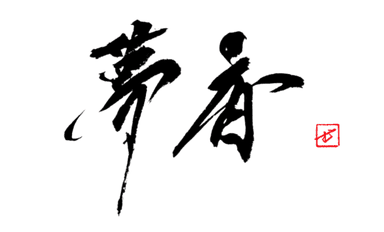
This is not a metaphor. The energy of the lines, the depth of the ink, the texture of the washi paper — when these exist in a space, the atmosphere of that place truly shifts, both visually and psychologically.
Why Calligraphy Transforms a Space
In calligraphy, it is said that the "ki" — the life energy — of the person who wrote it dwells within the lines. A powerful sweeping stroke, a quietly placed dot, a gently flowing curve — each movement reflects the breath and physical state of the person who held the brush, and their inner world in that very moment.
Viewers unconsciously sense this "movement." The momentum of the lines brings dynamism to a space; the quietness of the negative space creates calm. What makes calligraphy special among art forms is that it can be not only seen but felt.
A calligraphy work hung on a wall is not mere decoration. It is a presence that holds a kind of "field of energy."
The Historical Relationship Between Calligraphy and Space
In Japan's traditional spaces — the tea room, the tokonoma alcove, the Zen temple hall — calligraphy is always present.
In the world of tea ceremony, the hanging scroll (calligraphy or painting) in the tokonoma is called the "host of the alcove." That single scroll sets the theme for the tea gathering and becomes the spiritual axis of the entire space. Sen no Rikyu, the great tea master, is said to have believed that "in a tea room, calligraphy is the soul of the space."
In Zen spaces, single-character works such as "mu" (nothingness) or "kissa ko" (have a cup of tea) hang with overwhelming presence in vast rooms. A single character stripped of everything unnecessary defines the meaning of the entire place — this is precisely where calligraphy and space become one.
This thinking translates directly into contemporary interior design.
Three Effects Calligraphy Has on a Space
1. Creating a Focal Point That Guides the Eye
A key element of interior design is the "focal point" — the center to which the eye naturally travels.
Calligraphy works excel as focal points. The contrast between the black of ink and the white of paper, the directionality that the lines carry — these create a natural "flow of gaze" within a space.
Hanging a single piece of calligraphy on a white wall instantly makes that wall the protagonist of the room. The simpler the piece, the stronger its presence.
2. Bringing Breath to a Space Through Negative Space
At the heart of calligraphy's aesthetics is "ma" — negative space. The idea that the empty areas hold as much meaning as the written lines.
This connects directly to space design. Hanging a work with generous negative space brings a "sense of ma" to the surrounding space as well. Not filling every inch, preserving an easy, open air — the aesthetic of negative space in calligraphy is deeply aligned with the philosophy of minimalist living.
Even in a small room, a single calligraphy work conceived with ma in mind can make the space feel larger.
3. Introducing the Quality of "Stillness"
Contemporary living spaces are saturated with information and stimulation. Smartphones, television, advertising — something is always flying into our field of vision.
Placing a calligraphy work there is an intentional act of inviting something quiet into the space.
The color of ink makes no excessive demands, yet carries an undeniable presence. The texture of washi is gentle and absorbs visual noise. Standing before a piece of calligraphy, one feels an inexplicable settling of the mind — because it brings the quality of "stillness" into the space.
What to Hang, and Where
For the Entryway
The entryway is the "entrance" of the home — the entire impression of the house begins here.
Works with a "welcoming" energy suit the entryway well: single characters such as "wa" (harmony), "kan" (joy), or "hikari" (light), or abstract works with lively, inviting lines. Choose a piece that shifts your state of mind as you step inside after returning home.
For the Living Room
The place where family gathers and unwinds. Works that hold both "calm" and "warmth" are a good fit here.
Semi-cursive or cursive script that is neither too rigid nor too loose, or abstract works rich in gradations of ink tone. Keep the size proportional enough that the wall retains breathing room — it need not fill the entire wall.
For a Work or Study Space
A space for deepening concentration and organizing thought. Upright regular script works or simple single-character pieces suit this area well.
"Shizuka" (stillness), "kokorozashi" (aspiration), "michi" (the path) — placing a word you hold dear in a spot you see every day makes it a quiet guidepost in your daily life.
The Power of Washi and Ink as Materials
Part of why calligraphy works so well in interiors lies in the power of its materials.
Washi is made by hand from plant fibers. Its surface carries subtle irregularities, and its expression shifts with the angle of light. It has a softness reminiscent of cloth and a "warmth of the hand" entirely different from paint or print.
Ink is made from compressed soot of pine or oil. Its deep black, which absorbs rather than reflects light, harmonizes with any lighting environment and settles a space. The way its color deepens with age is one of calligraphy's distinctive qualities — the longer a piece is displayed, the more it belongs to that space.
There is a "material presence" to work made with actual brush, ink, and washi that cannot be reproduced digitally.
The Philosophy of "Arranging" a Space
Calligraphy holds an expression: "shodo wa kokoro no kagami" — calligraphy is a mirror of the heart. It means that the inner world of the writer appears in the lines.
In the same way, a space might be called the mirror of those who inhabit it. What you place there, what kind of air you create — this is a declaration of what state you wish to be in.
Bringing calligraphy into a space is not mere decoration. It is an intentional act of inviting qualities like "stillness," "focus," and "beauty" into daily life. Passing by that work each day, letting your eyes rest on those lines, slowly and quietly arranges the quality of the space — and, in turn, something within yourself.
A single line of ink holds that kind of power.
Closing Thoughts
Calligraphy works fit into contemporary minimalist interiors with surprising ease. Whether with Scandinavian-style furniture, a modern concrete interior, or a traditional Japanese room — the combination of ink and washi brings a "quiet presence" to any space.
Start with a single piece. An entryway, a desk, a bedroom wall. That small change may shift the air of the space, and with it, the quality of each day — just a little.